A ben admin API gives software programmatic access to an employer's benefits data: the plans offered, who's enrolled, and through what dates. They represent a big step forward for the benefits industry: for most of the last 20 years, that data has moved through manual, file-based data plumbing. Since SFTP drops and manual CSV uploads arrive in batches, the data they hold quickly goes stale.
APIs have already reshaped how payroll and HR data moves. That shift is now reaching benefits data, and it changes what downstream products can do: verify coverage at the moment a claim arrives, show an employee their plan the day it takes effect rather than two months later when the deduction hits a paycheck, onboard an employer in minutes instead of weeks.
This post covers what a ben admin API is, what data it moves and from where, and who in the benefits ecosystem depends on it. We also dig into why this data has traditionally been so hard to reach, and what changes when it comes through one API connection.
What is a ben admin API?
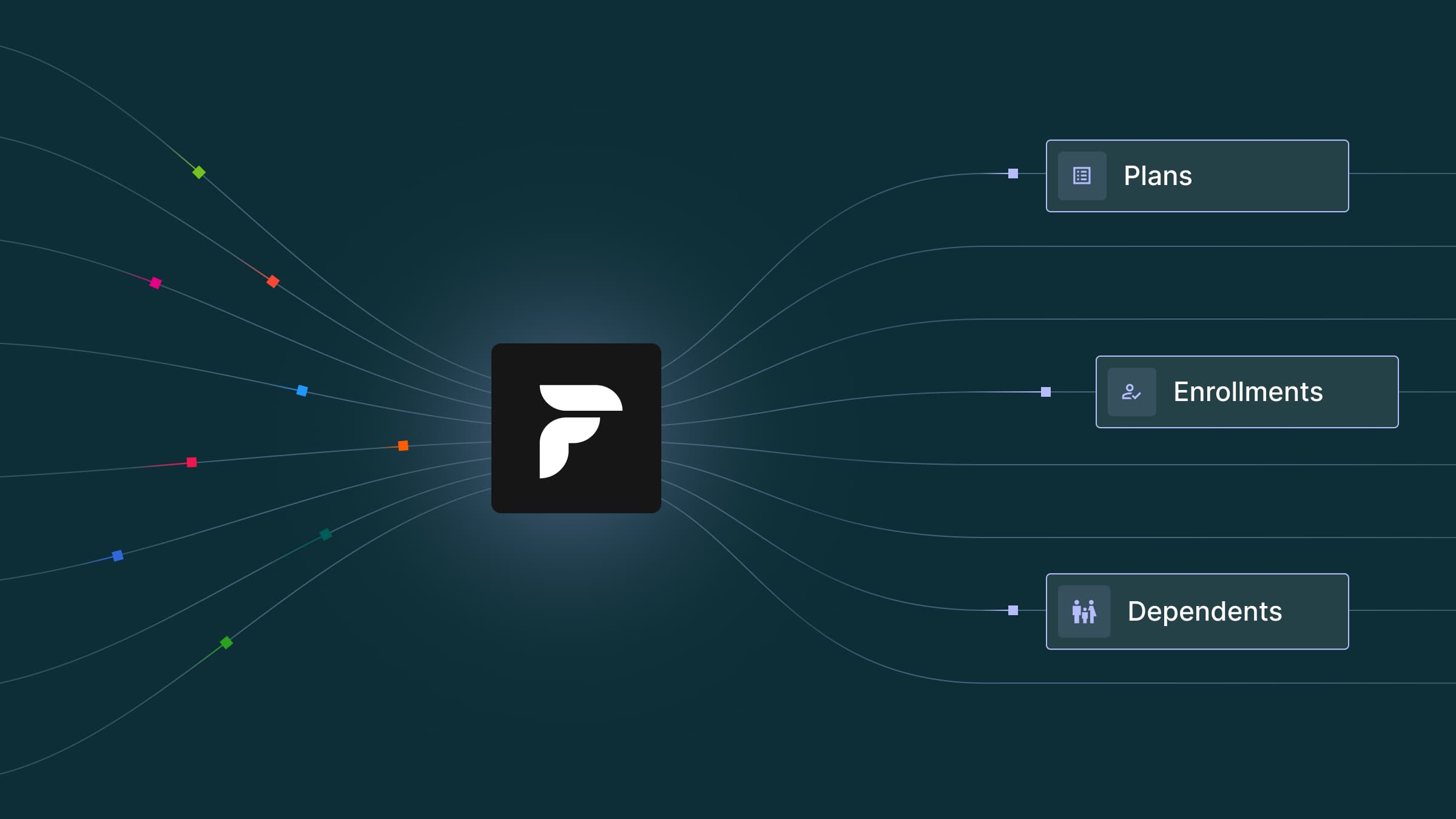
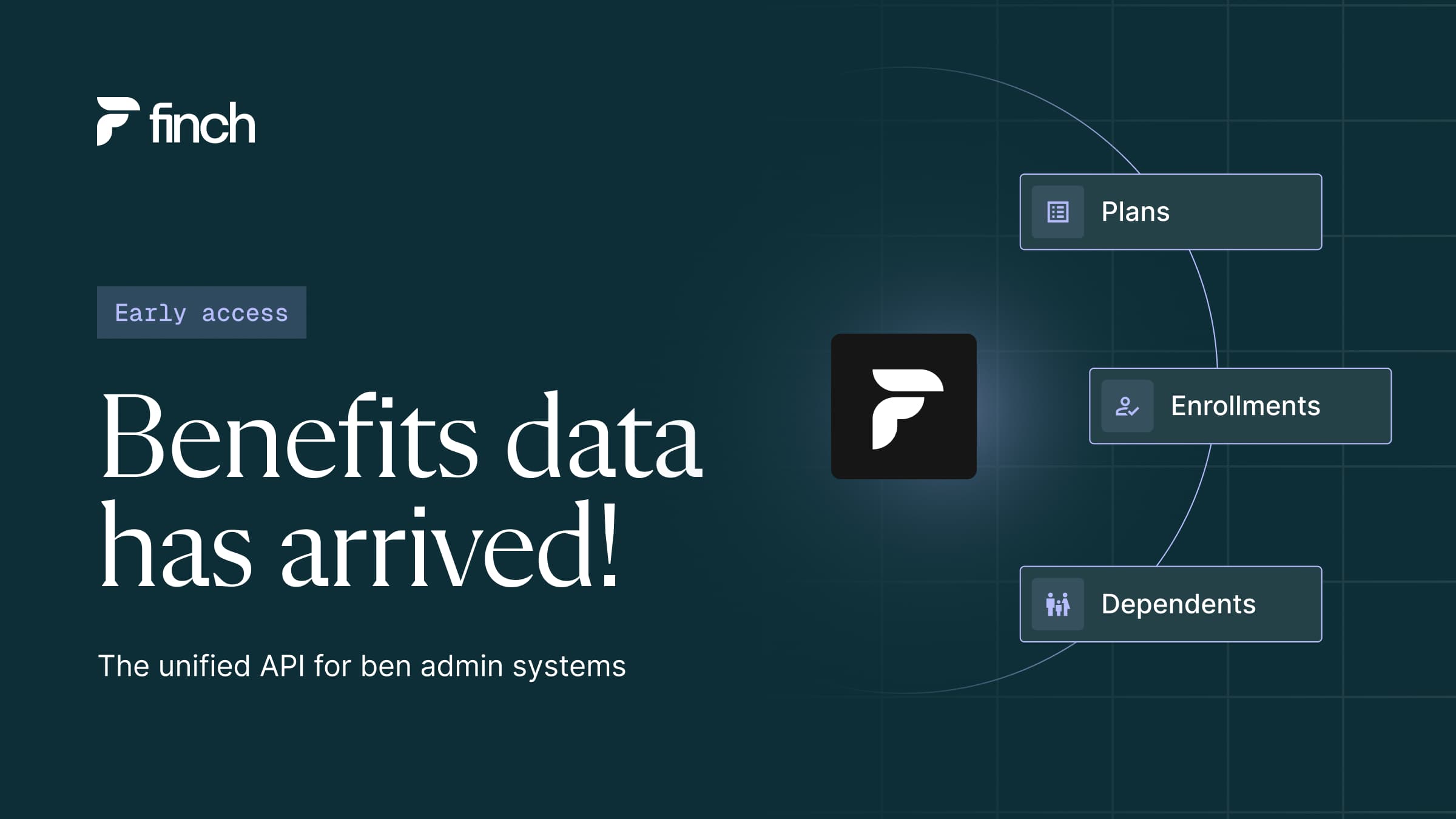
A ben admin API is a connector that gives software access to the data inside a benefits administration system: the plans an employer offers, which employees are enrolled in them, which dependents are covered, and when that coverage starts and ends. It replaces the file feeds and manual exports that have traditionally moved this data between employers and the platforms that serve them.
APIs have several advantages over SFTP file feeds and manual CSV uploads, but one of the biggest is programmatic data access. Through an API, the downstream software systems can pull data from the ben admin platform when it’s needed, so the data is always up to date. With files, benefits companies receive data in batches, meaning the data is only as fresh as the last sync. For workflows that hinge on a point in time, like adjudicating claims or determining eligibility, having fresh data is everything.
A single ben admin API connects to one system. A unified API connects to many systems and standardizes the data into a single format, so one integration reaches every employer regardless of which system they run.
What is benefits data?
Benefits data is the record of what employer-sponsored benefits an employee has access to, including which plans their employer offers, what they elected, who else that coverage extends to, and the dates it applies.
The information under the umbrella of “benefits data” can go by different names, depending on who you're talking to: elections, eligibility files, enrollment census, plan configurations. They all describe overlapping slices of the same underlying records.
In practical terms, those records sort into four buckets.
- The plan catalog — the medical, dental, vision, life, and short- and long-term disability plans an employer offers, with tiers, carriers, deduction codes, and effective dates. Carriers sometimes describe this by product line rather than by plan; ben admin teams may call its annual setup “plan configuration.”
- Enrollment records — who's enrolled in what, at what tier, with what effective dates and contribution splits. These are also called elections.
- Dependent records — the spouses, children, and other qualified dependents each employee has covered. Dependents are not the same as beneficiaries, which is a separate designation used for life claims.
- Coverage windows — the start and end dates of each employee's coverage, keyed to hire dates, qualifying life events, terminations, and leaves. The effective date is a field used by nearly every downstream workflow. It’s also worth noting that the benefit end date is not the same as the employment termination date — an employee terminated on April 20 may carry coverage through April 30.
One boundary is worth drawing early. Everything above is employer-side benefits data: what the employer's systems know. There's a second body of benefits data on the carrier side — what coverage is actually in force, what's been billed, what's been paid — that moves on entirely different rails.
Where benefits data lives: inside the HCM or in a standalone ben admin platform
Employers hold three distinct kinds of data that are necessary to administer a benefits program, and they don't all live in the same place.
- Who the employees are — names, employment status, hire and termination dates, job and location. This determines eligibility. It lives in the HRIS.
- What they're paid, and what's deducted — earnings, pay frequency, employee deductions, and employer contributions. This data lives in the payroll system and may be used to determine the amount that is paid out for a given benefit; it may also affect how benefits actually get funded.
- What they've enrolled in — the plan catalog, enrollment records, dependent records, and coverage windows. It lives in the ben admin system.
Ben admin systems come in a couple of shapes. Many employers run a single Human Capital Management (HCM) system that bundles payroll, HRIS, and benefits administration together — ADP Workforce Now, Workday, and UKG all work this way. Others keep payroll and HR in one place and run a dedicated ben admin platform alongside it, connected by file feeds or APIs.
Benefits companies need access to all three data sources — the HRIS data, payroll data, and benefits data — but in some situations they may all be stored in entirely separate systems of record.
Who needs access to ben admin data?
Almost every product sitting between an employer and its employees' benefits reads from this data.
- Insurance carriers verify coverage at claim time and calculate definition of earnings for life and disability payouts.
- Benefits navigators show employees what they're enrolled in and what they're eligible for but haven't taken.
- Leave and absence platforms confirm STD and LTD coverage before someone goes out.
- TPAs help employers administer the day-to-day aspects of a benefits plan. They may also prepare ACA filings, manage COBRA notices, or calculate FSA run-out. Eligibility auditors may also support compliance rules and regulations for employers, providing services such as dependent eligibility audits to confirm dependents are eligible for plan participation.
- Financial wellness tools model coverage costs against take-home pay.
- HR analytics tools segment utilization and cost by cohort.
Their workflows may be different, but each of these players shares a common problem: the difficulty of reaching the employee benefits data reliably.
Why benefits data has been hard to get
Three things have kept this data locked up.
Access is gated, and the gate is expensive. Where HCM or ben admin providers offer benefits APIs at all, reaching them usually requires a formal partnership program: legal review, security assessment, and in some cases per-employer access fees or revenue share before a single line of integration code gets written.
Benefits and payroll are frequently separate integrations at the same provider. Even when an employer uses one HCM for HRIS, payroll, and benefits, the benefits module and payroll system are often effectively different businesses. They have different APIs, different commercial agreements, and sometimes different teams on the other end of the email thread. Some of these providers charge for access to each API separately: once for the payroll data and again for the benefits data, even when they’re coming from inside the same vendor.
Nothing is standardized between employers, even on the same platform. ADP Workforce Now is a great example of this. WFN lets each employer define their own benefit deduction codes, and those codes are arbitrary and company-specific. A code that means one thing at one company can mean something else entirely at another company. There's no stable provider-side identifier that reliably says "this code refers to the medical plan," so any system reading that data has to work out, employer by employer, which codes correspond to which benefit. That's a meaningful part of why file feeds get configured one employer at a time in the first place.
The data doesn’t arrive unified. Even when a platform gets both feeds, they arrive as two datasets with no shared key. There's no reliable way to match an employee's payroll record to that same employee's benefits record without building and maintaining the entity resolution yourself. The provider hands over both halves and leaves the join as an exercise for the reader. That’s a heavy lift that includes normalizing identifiers, reconciling name and date-of-birth mismatches, and handling the cases where the two systems disagree, and it has to be maintained for every provider, forever.
Despite these challenges, plenty of benefits companies have still built their own ben admin APIs. But with so many different systems on the market, building an API integration to every provider your clients may use adds up quickly.
As a result, a lot of benefits companies find themselves stuck in the status quo, spending weeks onboarding each employer, running on data that's stale by days or weeks, and staffing an ops team to cover the gaps.
What changes with a unified ben admin API
With a unified ben admin API, carriers, TPAs, and bentech companies get programmatic data access to all of the systems employers use for the cost of a single integration build. Here’s how that works.
One integration instead of hundreds. With a unified API, you build a single integration to a unified API provider, and each employer authorizes their own data to flow through it. The partnership work, security review, and integration maintenance on the provider side sit with the integration partner, not your engineering team. An employer connects in minutes rather than weeks, so you can start delivering value on day one of the relationship instead of week four.
Benefits and payroll data that live in the same system arrive through the same connection. Rather than two APIs, one for payroll and one for benefits data, the same connection funnels information from both systems.
(The exception is if the employer uses a totally different ben admin system; in that case, they may need to authorize a separate connection for each system. But even then, it’s still only one vendor relationship for you to manage.)
Provider-specific messiness gets normalized on the way out. A standardized data model means a medical plan looks like a medical plan whether it came from Workday or ADP Workforce Now, and coverage tiers come back in one consistent vocabulary rather than each provider's own.
And the data arrives already joined. This is easy to undervalue unless you've built the alternative. When employee records, pay data, and benefits enrollment come back through one standardized data model, the employee in the enrollment record is the same employee object as the one in the pay statement.
What that adds up to: a query you can run when the claim arrives, rather than a file you received last Tuesday.
Read benefits data and write deductions back to payroll
Reading benefits data solves half the problem, but the complete benefits workflow touches payroll, too. Most workplace benefits are funded through payroll deductions and contributions, so whenever an employee enrolls, changes tiers, adds a dependent, or terminates, a deduction has to change too. Historically, that half has run on its own set of manual processes — a deduction report exported from the ben admin system, handed to whoever maintains payroll, keyed in per employee and sometimes per pay period.
Finch is the only unified API that can both read benefits enrollment data and write deductions and contributions back to payroll. With one connection, a platform can surface an employee's coverage, verify their dependents, and adjust the paycheck line item that funds their plan.
That closed loop is what distinguishes a benefits integration platform from a benefits data feed. It's also increasingly what wins business.
For teams already using Finch for payroll and HR data, Benefits is an extension of a connection you've already made that adds plans, enrollments, and dependents to the data you can access from employers.
How to get started
Finch Benefits is available today in Early Access for ADP Workforce Now and Workday, with more providers arriving through the 2027 Open Enrollment season.
- Read the docs. The Benefits API documentation covers the plans, enrollments, and dependents endpoints and how they relate to the employee records you may already be pulling.
- Check field support. The field support matrix shows exactly which fields are available per provider, so you can scope against reality rather than a roadmap.
- Try it yourself. Sign up for the sandbox to explore the data model before you write anything.
- Talk to us. Request Early Access and we'll walk through your use case and coverage needs.
FAQ
Is a ben admin API the same as an employee benefits API?
In practice, yes, they're two names for the same thing. "Employee benefits API" tends to describe it from the employee's perspective (what am I enrolled in?) while "ben admin API" names the system the data comes from. Both refer to programmatic access to plans, enrollments, dependents, and coverage dates.
What's the difference between a ben admin system, HRIS, and HCM?
An HRIS holds employee records: who works at the company, their employment status, and their personal information. A ben admin system holds the benefits program: the plans offered, who elected what, and which dependents are covered. Many HCM platforms bundle HRIS, ben admin, and payroll, which is why the line between them blurs in practice.
Do I need a benefits integration platform or a unified API?
A unified API is a benefits integration platform — one that covers many providers through a single standardized interface rather than connecting to one system at a time. The question worth asking is coverage and data model: how many of your customers' systems are supported, and does the benefits data come back joined to payroll and HR data, or separate from it?
What benefits data does Finch return?
Plans (catalog, carrier, coverage tiers, deduction codes), enrollments (per-employee elections, contributions, dependents), and dependents (demographic data). Coverage varies by provider — see the field support matrix for exact fields.

97% of HR professionals say it’s important for your app to integrate with their employment systems
Learn more in our State of Employment Technology report ->
97% of HR professionals say it’s important for your app to integrate with their employment systems

Payroll Integrations Made for Retirement