Unified APIs are one of the fastest ways to scale your integration strategy, but not all unified APIs are created equal. They vary widely in provider coverage, data richness, integration method, and capabilities, and choosing the wrong one can leave you with gaps in the systems and data your customers actually need. In this guide, we compare the top 7 unified APIs for HRIS and payroll data to help you make an informed decision.
We also share the 5-pillar framework we used to evaluate each provider, so you can supplement our comparison with your own research and understand how to choose the right unified API for your specific needs.
What is a unified HRIS and payroll API?
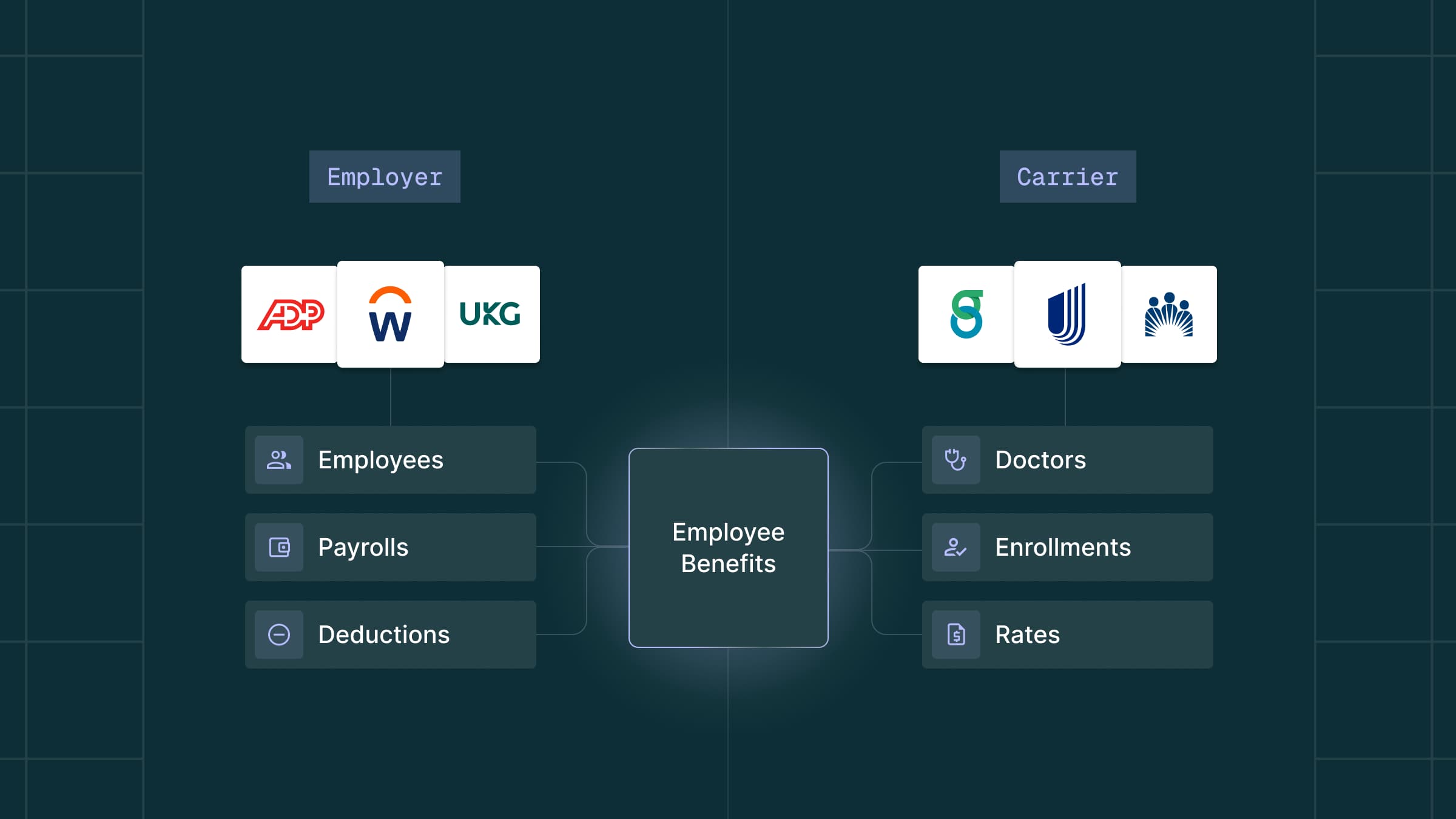
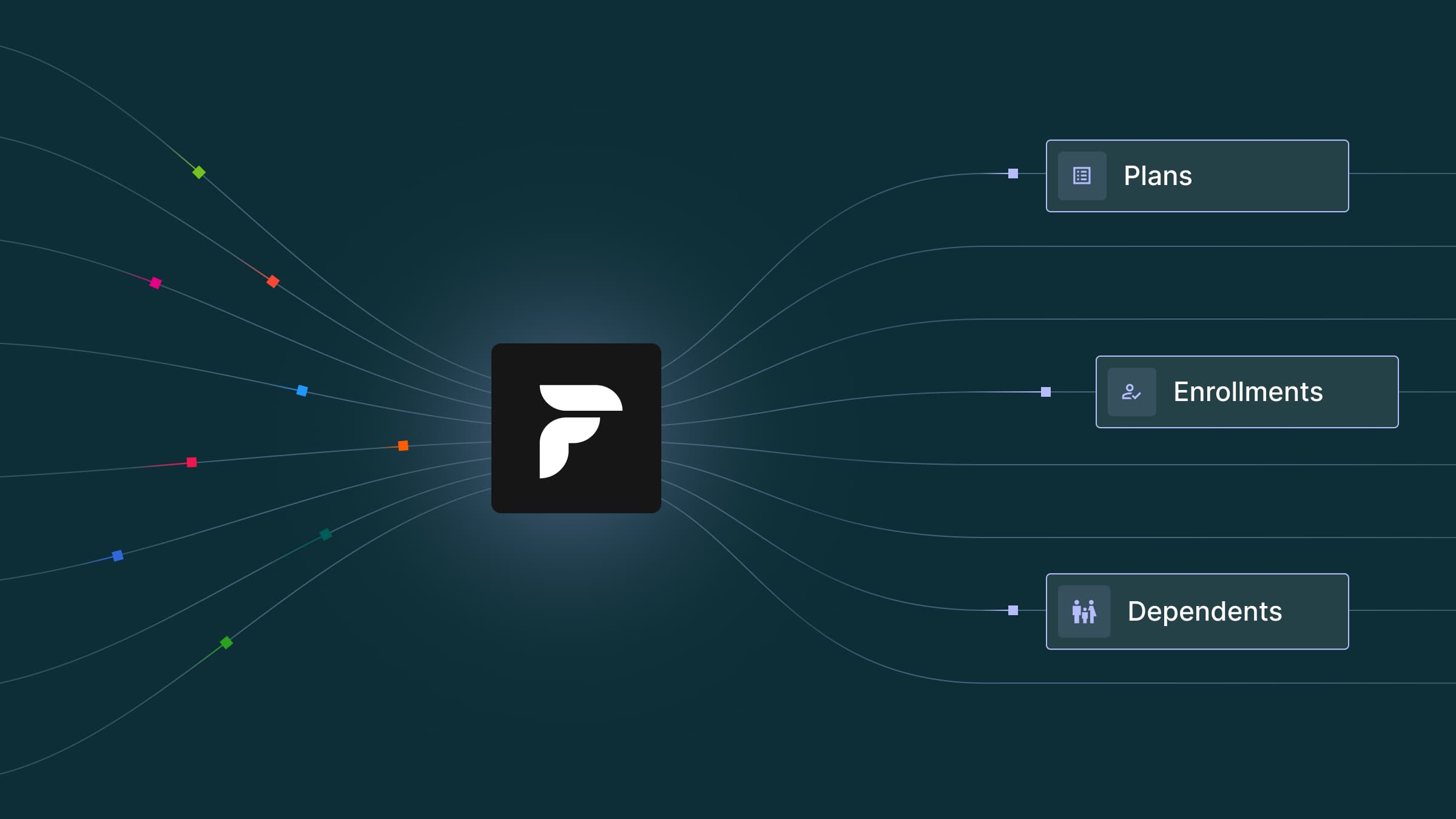
A unified HRIS and payroll API gives you a single interface to read employment data like employee records, org charts, pay statements, deductions, and benefits from any supported provider. Instead of building and maintaining individual integrations, you integrate once with a unified API and unlock coverage across hundreds of providers, saving months of engineering time and eliminating the ongoing maintenance burden.
The 7 best unified APIs for HRIS and payroll in 2026
The leading unified APIs for HRIS and payroll in 2026 are Finch, Truto, Merge, Bindbee, Kombo, Knit, and Apideck. They differ on provider coverage, data depth, integration method, sync frequency, and write-back capabilities. The best choice depends on your use case, the providers your customers use, and how deep you need to go into payroll data.
Below is an honest look at each provider, including Finch.
1. Finch — best for deep HRIS and payroll coverage
Finch is a connectivity platform built exclusively for the employment ecosystem. It offers a unified API for HRIS, payroll, and benefits data, with 250+ integrations covering the largest share of the U.S. employer market. Finch supports all of the top providers, including QuickBooks Payroll, ADP (Run and Workforce Now), Paychex, Gusto, UKG, Rippling, and the isolved ecosystem.
✅ Strengths
- 250+ HRIS and payroll integrations—4x the coverage of the nearest competitor
- Access to data providers with no public API—unlock new integrations in 7 days
- Pay statement-level data: standardized earnings, taxes, deductions, and contributions across providers
- Write-back capabilities: create and manage payroll deductions and contributions programmatically
- Official partnerships with Gusto, Paycor, UKG, and others, delivering better data access, no API fees, and marketplace distribution support
⚠️ Limitations
- No support for ATS, CRM, accounting, or other non-employment related categories
- Primarily U.S.-focused—no EU data residency
- Some integrations refresh weekly vs daily
💡 Best for: Teams building benefits, retirement, insurance, HR automation, or fintech products that need deep payroll data and broad U.S. provider coverage.
2. Truto — best for real-time, pass-through architecture
Truto (truto.one) is a unified API platform with 500+ integrations across more than 30 categories, including HRIS, payroll, ATS, CRM, accounting, and ticketing. Their core differentiator is their pass-through architecture: every API call hits the source system directly, with data only stored or cached on Truto's servers under the SuperQuery API.
✅ Strengths
- Real-time, pass-through architecture: no data caching or sync jobs
- Proxy API for direct, unmapped access to the underlying provider's API when the unified model doesn't cover your needs
⚠️ Limitations
- HRIS and payroll is not the primary focus—payroll data depth is limited compared to employment specialists
- No support for providers without public APIs
- No payroll write-back support for deductions or contributions
- Real-time-only architecture means no persistent data layer. Teams that need historical snapshots or batch processing may need additional infrastructure.
- SuperQuery feature for rate-limiting challenges uses a cache, meaning some data is still stored
💡 Best for: Teams that prioritize real-time data access, want to avoid per-connection pricing at scale, and need integrations across many SaaS categories—especially those with strict data residency or compliance requirements that benefit from a zero-storage architecture.
3. Merge — best for enterprise-ready developer experience
Merge (merge.dev) is a unified API that spans 8 categories including HRIS, ATS, accounting, ticketing, CRM, and file storage. If you need integrations across many software verticals, Merge offers broad horizontal coverage.
✅ Strengths
- 8 unified API categories in a single platform
- 220+ total integrations across all categories
- Strong ATS coverage alongside HRIS
- Well-documented API with a mature developer experience
⚠️ Limitations
- HRIS and payroll coverage is significantly lower than employment-focused providers
- No support for QuickBooks Payroll or ADP Run, which together represent roughly a third of the U.S. employer market
- No standardization for pay statement-level detail (earnings, taxes, deductions)
- No write-back support for payroll deductions or contributions
- No coverage for providers without public APIs
💡 Best for: Teams that need lightweight integrations across many SaaS categories (CRM, ATS, accounting, etc.) and don't require deep payroll data.
4. Bindbee — best for speed to market
Bindbee (bindbee.dev) is a newer unified API (founded 2023) for HR, payroll, and ATS systems. They compete on aggressive pricing and fast onboarding, positioning themselves as a scrappy alternative for teams that want to get started quickly.
✅ Strengths
- Low price point: reported pricing around $35–50 per connection, low or no platform fees
- Covers HRIS and ATS basics with approximately 75 integrations
- Offers optional on-premises deployment for teams with strict data residency requirements
⚠️ Limitations
- Key integrations (ADP Workforce Now, Paylocity, Rippling, isolved) are SFTP-based, meaning weeks of setup time for employers and frequent drop-off before completion.
- No published field support documentation, meaning there’s no means of verifying what fields are supported for each provider.
- Very limited write support and payroll depth
- Early-stage company with no publicly-known enterprise customers
💡 Best for: Early-stage teams with limited budget that need basic HRIS integrations and don't require deep payroll data or enterprise reliability.
5. Kombo — best for ATS coverage and depth
Kombo (kombo.dev) is a unified API focused on employment system integrations including categories like ATS, HRIS, and LMS. Founded in 2022 and with offices in Berlin and New York, the company boasts strong coverage, particularly among European employment systems.
✅ Strengths
- Broad coverage of ATS, HRIS, and LMS systems, including both EU- and US-based providers
- Strong European HRIS and ATS coverage with support for region-specific providers
- Read and write support across HRIS, ATS, assessment, and LMS data models
- Clean API design and developer experience, with engineer-led support
⚠️ Limitations
- Limited payroll support: Kombo only returns employee pay rate for most providers.
- Offers very limited payroll write support in the U.S.
- Missing major U.S. providers: QuickBooks Payroll, ADP Run, Paychex Flex, Rippling, and Justworks
💡 Best for: Teams building HR or recruiting products that need deep integrations across workforce systems, but don’t need payroll depth.
6. Knit — best for horizontal SaaS integration
Knit (getknit.dev) is a unified API platform that spans multiple SaaS categories including HRIS, payroll, CRM, ATS, accounting, and e-signature. They differentiate with a unique stateless architecture: Knit uses a 100% webhook-based sync model, making it best for pure data pass-through.
✅ Strengths
- Multi-category support: HRIS, payroll, CRM, ATS, accounting, e-sign, and more
- 100+ integrations across all categories
- Privacy-first architecture: stateless data syncs with no customer data cached on Knit's servers
⚠️ Limitations
- Smaller integration count compared to specialists
- Limited payroll depth relative to employment-focused providers
- Less established in the enterprise market
💡 Best for: Teams that need integrations across multiple SaaS categories and value a privacy-first, stateless architecture.
7. Apideck — best for multi-vertical coverage
Apideck (apideck.com) provides unified APIs across accounting, HRIS, CRM, ATS, file storage, and e-commerce, with a particular focus on real-time data access and developer experience.
✅ Strengths
- 190+ integrations across 7+ categories
- Real-time data access without caching—every API call queries the source system directly.
- White-label embedded auth component (Vault)
⚠️ Limitations
- HRIS is one of many categories, not the primary focus—coverage and data depth for payroll is limited compared to employment specialists.
- No payroll write-back support for deductions or contributions
- No coverage for providers without public APIs
- Real-time-only architecture means no persistent data layer—helpful for some use cases, limiting for others that need historical data.
💡 Best for: Teams building multi-vertical SaaS products that need clean, real-time access to a broad range of software categories with a strong developer experience.
Head-to-Head Comparison Table
How we evaluated: 5 pillars for choosing a unified HRIS and payroll API
To compare the leading unified APIs, we used the following framework based on what matters most when you're evaluating a provider for production use: provider coverage, data model depth, integration method, data freshness, and write-back support.
1. Provider coverage — how many systems can you actually connect to? Raw integration count matters, but it's not the whole story. Some unified APIs cover multiple software categories, so while their total coverage number seems high, only a fraction of those are HRIS and payroll systems. You’ll also want to consider how those integrations are built: some providers connect through public APIs, others through private partnerships, and some through assisted or file-based methods. The distinction matters because it affects setup time, data freshness, and the depth of data you can access.
2. Data model depth — do you get the fields you actually need? Every unified employment API offers basic employee directory data like names, titles, and departments. The real differentiation lies in payroll depth: can you access individual pay statements with line-item detail on earnings, taxes, deductions, and employer contributions? Can you see org chart hierarchies and custom fields? Just because a unified API's data model includes a field doesn't mean it's supported across every provider, so it’s important to evaluate the API’s capabilities across all the providers that are important to you.
3. Integration method — API-only, assisted, or hybrid? Most unified APIs are pure API aggregators: they can only connect to providers that already offer a public API. This creates a coverage ceiling, because many payroll systems, especially in the mid-market and long-tail, don't have accessible APIs. The most robust solutions use a hybrid approach that allows them to maximize provider coverage without sacrificing data quality or security.
4. Data freshness — how often does your data actually sync? For API-based integrations, most unified APIs offer daily syncs, with some supporting webhooks for near-real-time updates; but sync frequency often varies by integration method.
5. Write-back support — are the integrations bidirectional? If your product involves making changes to the employer’s system of record—enrolling employees in benefits, creating and updating deductions, and so on—you’ll need a 360° integration that allows you to both read and write data back to the payroll provider. If you’re only able to read data from the employer’s system, your most time-sensitive operations will still be manual.
Final verdict
Every provider on this list solves a real problem. The right one depends on what you're building and how deep you need to go. If you evaluate unified APIs against the 5 pillars we outlined—provider coverage, data model depth, integration method, data freshness, and write-back support—the differences become clear.
If your core use case depends on granular details, write-back capabilities, and broad system coverage, Finch is the purpose-built choice. We support 250+ HRIS and payroll integrations, return standardized pay statement data, and can write back to payroll systems to manage contributions and deductions programmatically.
Learn how Finch can support your platform by scheduling a call with our Sales team, or continue your research with our Buyer’s Guide to HR + Payroll Integrations.
FAQs
What is the best unified API for payroll data? Finch offers the deepest payroll data coverage of any unified API, with standardized pay statement-level detail (earnings, taxes, deductions, and contributions) across 250+ providers. If your use case requires granular payroll data (for example, benefits enrollment, retirement plan administration, or workers' compensation), Finch is purpose-built for that. Other providers like Merge and Apideck offer payroll as one category among many but lack the same depth.
Is Finch secure? What about assisted integrations? Yes. Finch is SOC 2 Type II, HIPAA, GDPR, and CCPA compliant. Data is encrypted at rest, in transit, and at the application level. Assisted integrations are subject to the same security controls as automated integrations, including strict access controls, data classification, and audit logging. They exist to cover providers that lack APIs, where the only alternative is manual data processing, which carries far greater risk.
How does Finch compare to Merge? Both are unified APIs, but with different areas of focus. Finch specializes in HRIS, payroll, and benefits with 250+ employment-specific integrations, pay statement-level data, and write-back capabilities for deductions. Merge is a horizontal platform with 7+ categories but significantly shallower employment coverage—it doesn't support QuickBooks Payroll or ADP Run (roughly a third of the U.S. market) and lacks standardized payroll data and write support.
How does Finch compare to Kombo? Kombo is a strong choice for European HRIS and ATS coverage. However, Kombo has no payroll data model—zero endpoints for pay statements, earnings, taxes, or deductions—and is missing major U.S. providers like QuickBooks, ADP Run, Rippling, and Paychex. Finch offers 250+ HRIS and payroll integrations with deep pay data and write-back support for deductions, making it the better choice for U.S.-focused payroll use cases.
How does Finch compare to Bindbee? Finch supports over 3x more HRIS integrations than Bindbee (250+ vs. ~75). Bindbee's key integrations with ADP, Paylocity, Rippling, and isolved are SFTP-based, which require weeks of employer setup. Bindbee also lacks published field support documentation, so there's no way to verify which fields are actually available for a given provider. Finch offers API-based and assisted integrations with daily syncs, published field support docs, and provider partnerships that eliminate API fees.
Are Pay(k)onnect and Payroll Integrations unified APIs? No. Pay(k)onnect and Payroll Integrations are payroll connectors—managed data pipelines rather than self-service developer APIs. They're primarily used by benefits providers and retirement plan administrators (TPAs) to automate data transfer between payroll systems and recordkeepers. Unlike unified APIs, they typically require the employer to sign a separate contract and pay fees directly, have longer onboarding timelines (weeks to months), and don't offer a standardized API or developer interface. If you're a product or engineering team building employment data into your product, you want a unified API—not a managed connector.
Can I use a unified API for real-time payroll data? Most unified APIs offer daily syncs for API-based integrations, with some supporting webhooks for faster updates. True real-time payroll data is uncommon because payroll systems themselves typically process on fixed cycles (biweekly, semi-monthly, monthly). Finch supports webhooks on paid plans for near-real-time notifications. For assisted integrations, Finch refreshes data weekly—a tradeoff for covering providers that wouldn't otherwise be accessible at all.

97% of HR professionals say it’s important for your app to integrate with their employment systems
Learn more in our State of Employment Technology report ->
97% of HR professionals say it’s important for your app to integrate with their employment systems

Payroll Integrations Made for Retirement