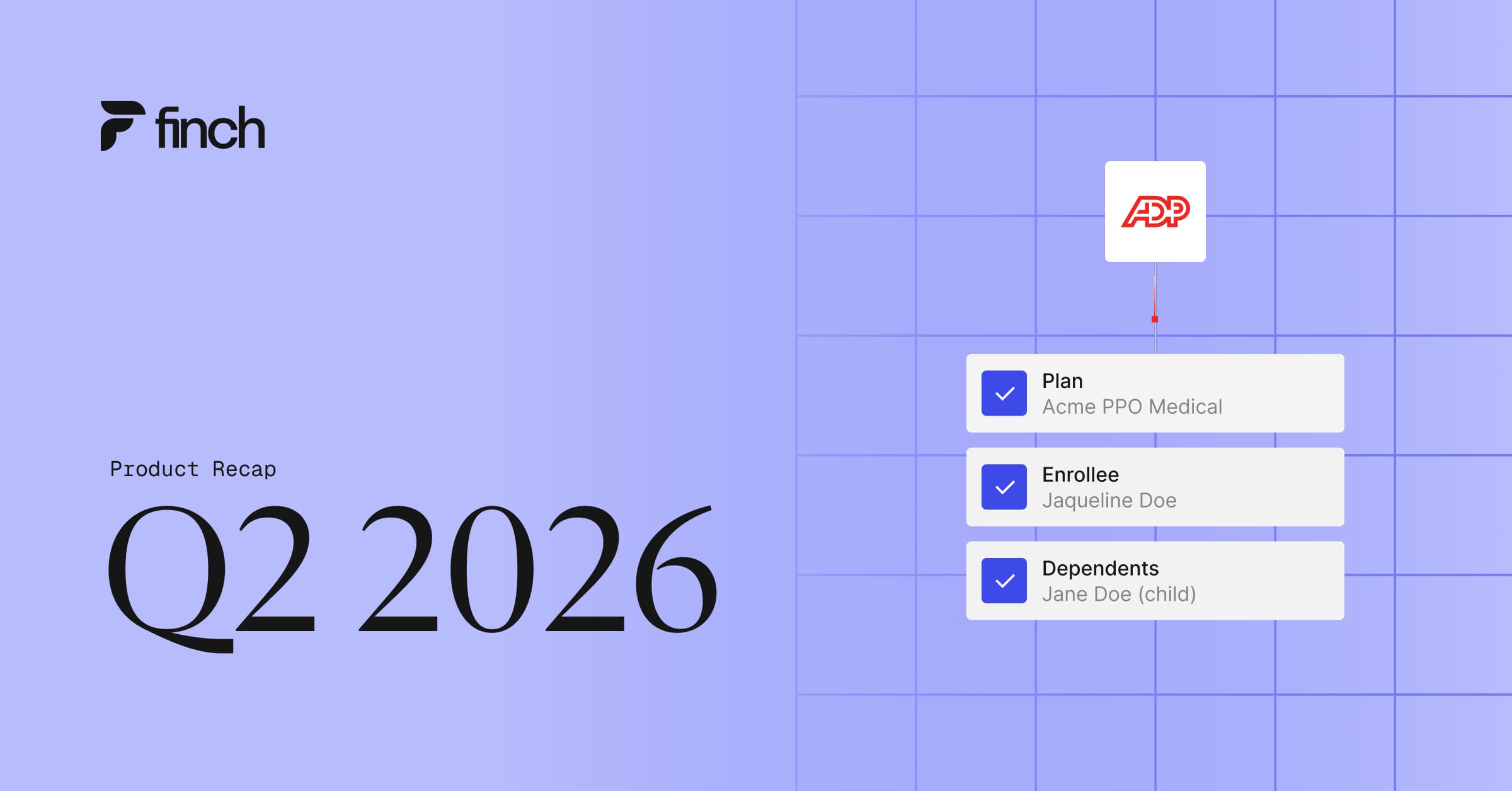
Finch’s product is continuously improving, with releases posted to the changelog as they go live. Once a quarter, VP of Product Gayathri Somanath shares a digest — one place to catch up on everything we released over the previous 3 months, why it matters, and what’s next on our roadmap.
Programmatic access to benefits administration data has been one of the most consistent requests we've heard from customers. Powering end-to-end benefits workflows is a core product priority at Finch, and we built for it in order.
At their core, benefits workflows require reading from and writing to payroll, so that's where we started, with our Pay and Deductions APIs. But in Q2 of this year, we expanded into benefits administration (ben admin) data, powering additional benefits workflows and furthering our mission to build the infrastructure that powers every facet of work.
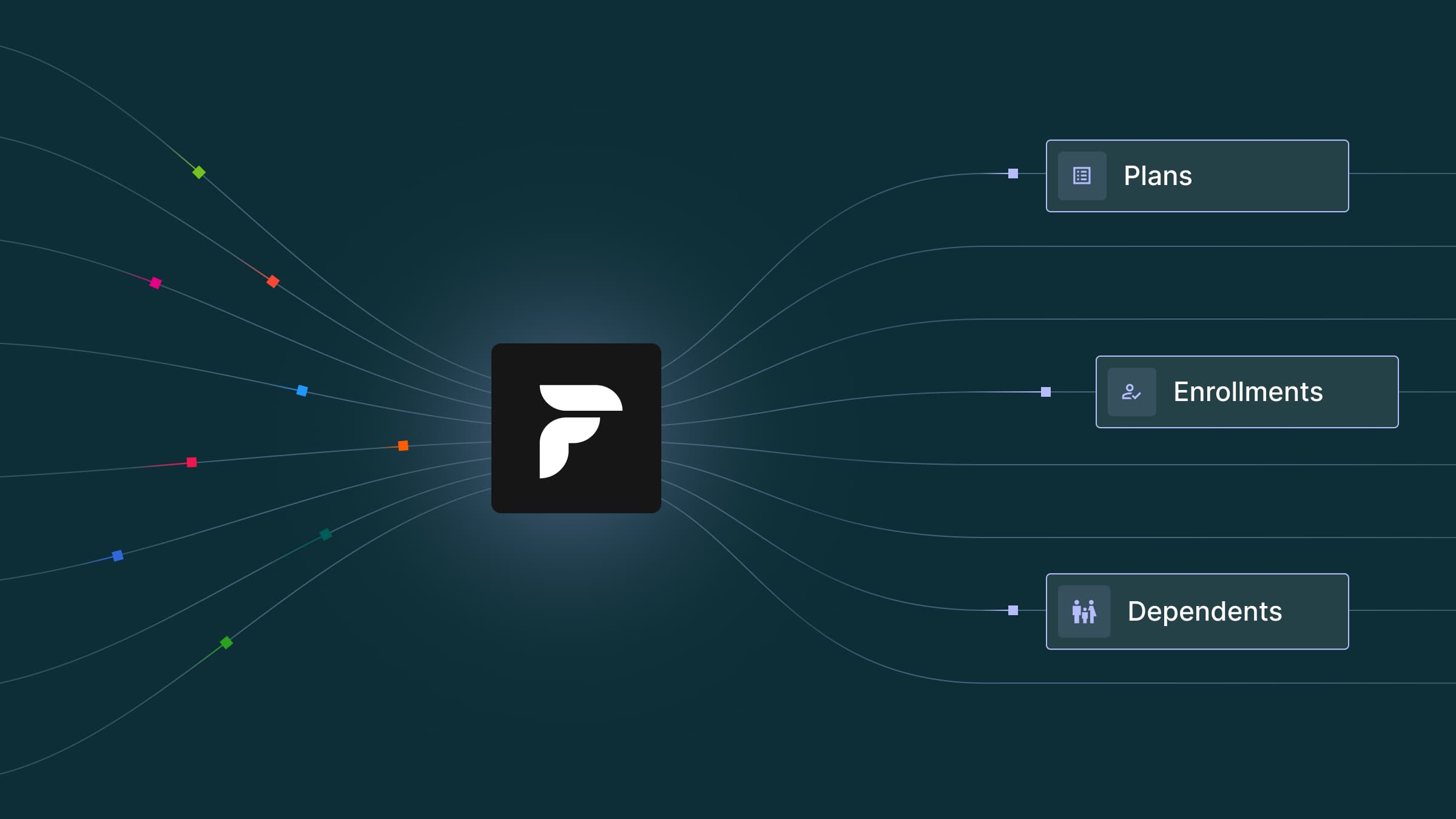
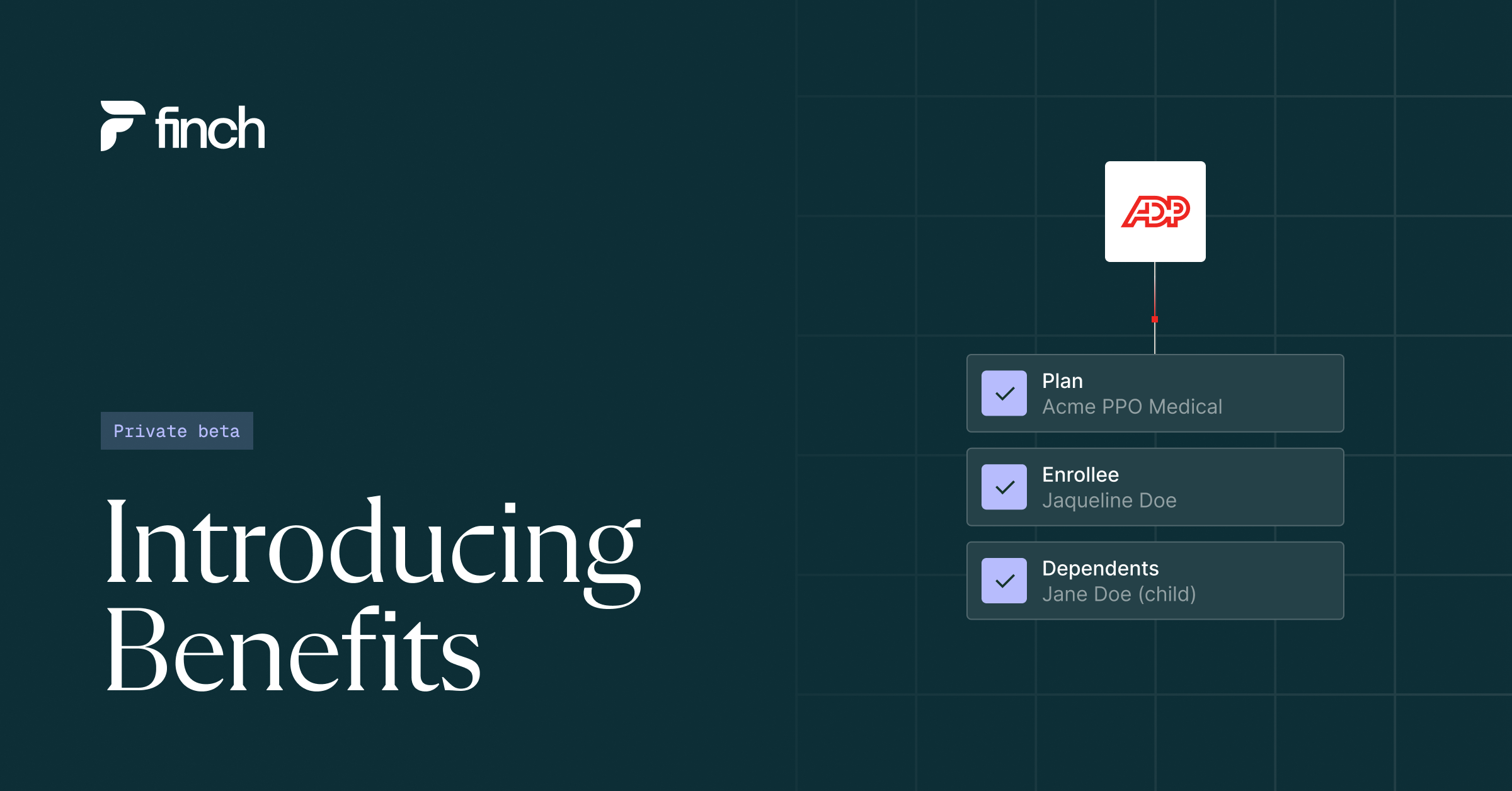
I’m proud to announce that Finch Benefits is now in private beta. The Benefits API extends Finch’s existing data coverage to benefit plans, enrollments, and dependents. This was the bulk of the product team’s work in Q2, and marks the most significant expansion of our core product suite since we started writing data back to payroll.
But that wasn’t all we accomplished last quarter. We also expanded our provider network and released updates that made existing integrations more powerful; shipped Finch Integration Skills so developers can build and audit integrations with AI agents; and and removed the email forwarding step that used to add weeks to implementation.
We even became an app developer on our own API, building sponsor onboarding for Finch Recordkeeper on the same self-serve flow our customers use.
Here’s the full recap.
The next frontier: Finch Benefits
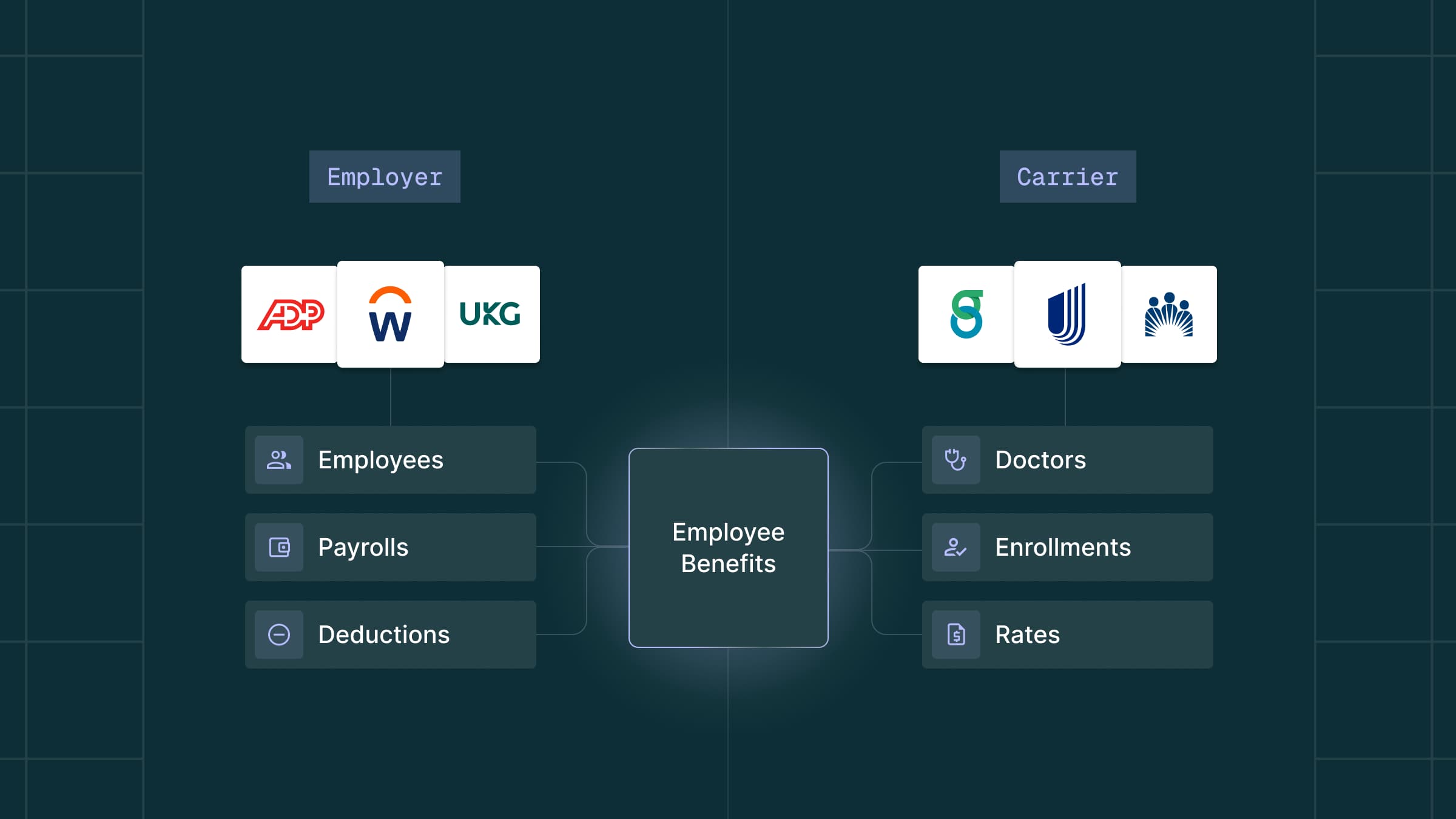
Demand for programmatic access to benefits administration (ben admin) data like plan details, enrollments, and dependent information has been steadily rising for years.
Today, carriers, TPAs, and benefits tech platforms primarily rely on manual batch cadences like EDI feeds; but that leaves them to make claims and eligibility decisions against stale data. The alternative of building API integrations with individual payroll and ben admin systems moves data faster, but can cost millions and take years to complete.
Finch Benefits replaces manual feeds with one employer-authorized API connection.
This is a natural expansion from where Finch already sits. Our Deductions API provides the rails for our customers to write deductions and contributions into payroll systems, representing the paycheck side of a benefits program. Now, our platform can also read the other half: who is enrolled, in which plan, with which dependents. Finch Benefits closes the loop so through one connection, a platform can surface an employee's coverage, verify their dependents, and adjust the paycheck line item that funds their plan.
Benefits entered private beta this quarter, starting with ADP Workforce Now and Workday. UKG Ready, Employee Navigator and more are to follow.
You can learn more about Benefits in our API docs, test it yourself in the sandbox, or request to join the private beta.
Deeper coverage, fresher data, new dev support
Q2’s platform work came in three parts: new data, faster connections, and less work to get live.
New field and provider coverage
- Warp joined the provider network with support for Organization data and daily syncs.
- Deel payroll data, with SSN support for US employees — /payment and /pay-statement are now supported via OAuth, with full line-item breakdowns across earnings, taxes, employee deductions, and employer contributions.
- Trustpoint joined the provider network with Organization, Pay, and Deductions support.
- New fields across the Finch API — Several new fields commonly used across benefit plan administration, compliance testing, and to make eligibility decisions are now supported by the Finch API: marital_status, highly_compensated_employee, key_employee, union_code, and union_local.
- General ledger support in Pay — Our API now supports general ledger data alongside itemized payroll data, starting with Gusto. More providers are coming soon.
Automation and auth upgrades
- Automated Deductions for ADP Run — Our ADP Run integration is now automated for our Deductions endpoints, meaning write-backs now complete in under 12 hours, down from two business days.
- Daily syncs and streamlined auth flow for isolved — Our isolved integration now syncs data every 24 hours across Organization and Pay data, and we’ve streamlined the authorization flow in Finch Connect for a smoother setup experience.
- Fresh automations for Ceridian Dayforce — Our Ceridian Dayforce integration now syncs data every 24 hours, and we’ve automated the authentication flow in Finch Connect for a smoother experience
- Instant benefits reads with freshness metadata — Reads of benefits and deductions data now return immediately from Finch's data layer, with every response carrying the timestamp of when those values were last confirmed with the provider. Finch keeps the data current in the background, refreshing automatically when it ages past 12 hours. Customers get predictable response times and explicit visibility into data recency, so they can make eligibility and enrollment decisions with a known confidence window.
Investing in the Developer Experience
This quarter we invested in two improvements aimed at saving developers time and effort: simplified configuration for emails when a connection requires it, plus skills written to enable AI agents to build or audit your platform’s connection to Finch.
Zero-configuration connection setup
Finch now provisions and manages the connection infrastructure for credential-based integrations end to end. There is no setup work on your side — nothing for your IT team to configure, review, or approve, and no domain or mailbox changes to request.
Your company name is carried through to what employers see during setup, so the connection stays recognizably yours. For customers, this removes a configuration step that previously added weeks to implementation and reduces how often connections need to be re-established. Existing customers keep working exactly as before — no migration, no action needed.
Finch Integration Skills
Developers can now build a new Finch integration, or audit an existing one, using AI agents.
Agent traffic to Finch Docs has climbed steadily through 2026: the share of documentation traffic attributable to agents is up 48% year over year. Customers were already pointing agents at our docs, so we made the docs something an agent can actually build against: packaged instructions for implementing endpoints correctly, handling provider variability, and checking existing code against our data model.
See the docs on building or auditing with AI →
We built on Finch ourselves for Finch Recordkeeper
Reliability metrics, system performance dashboards, and customer feedback are all great ways to measure infrastructure quality. But there’s one litmus test that can quickly summarize all of those signals: does the company use its own product?
In one of my favorite stories from this quarter, Finch became an app developer on our own API by building an employer-facing application for Finch Recordkeeper.
Because Finch Recordkeeper can be accessed directly by sponsors, we needed a way to reach those employers directly. In Q2, we built the Sponsor Self-Serve Portal: an app that lets sponsors authenticate their payroll–recordkeeper data connection without an intermediary platform.
We built the sponsor onboarding experience the same way any customer would, using the same self-serve connection flow, endpoints, and employer-facing authorization. There were no internal shortcuts, and we took everything we learned through that process and applied it toward optimizing the platform for an even better developer experience.
We reached several other product milestones in Q2 that moved the product closer to leaving private beta and entering GA, including adding the Recordkeeper scope to Finch Connect so platform partners can embed the connection flow within their own application and maintain a consistent UI. I'm looking forward to being able to share more soon.
Looking ahead
Back in June, I reflected on a first quarter defined by expansion. If Q1’s story was expansion, then Q2’s was execution: turning new territory into real products, automating more of our integrations, and leaning into AI tools when it means we can responsibly ship platform improvements faster.
Our goals for the second half of this year are focused on widening access to Finch Recordkeeper and Benefits. Stay tuned; we’ll have more to share soon.
In the meantime, we’ll continue shipping the iterative improvements that continually refine and strengthen our platform.
Want to see what Finch can do for your team? Get in touch or sign up to get started.

97% of HR professionals say it’s important for your app to integrate with their employment systems
Learn more in our State of Employment Technology report ->
97% of HR professionals say it’s important for your app to integrate with their employment systems

Payroll Integrations Made for Retirement