In 2025, U.S. employers faced growing pressure to do more with less. Healthcare costs continued to climb. New retirement mandates grew participation rates—and added complexity to the compliance landscape. And on top of it all, AI continues to change (and challenge) how work gets done.
Our customers are a big part of the solution. They are the builders making personalized benefits more affordable, replacing paper-based processes with automation, and creating new ways of working with technology at the center. At the heart of this shift is a growing demand for secure, reliable access to employment data.
This is where Finch comes in. In 2025, connections through Finch more than doubled. Even more telling, we connected more employers in 2025 than in every prior year combined, bringing the total to 120,000 companies that have connected a system of record to our platform. That kind of growth only happens when customers trust the infrastructure underneath it—and we’re incredibly grateful for the opportunity.
Here’s a snapshot of our year.
Trust at scale: Finch’s year in numbers
.png)
To date, 120,000 employers have connected their HR and payroll data to third-party applications through our infrastructure. Our platform has synced 16.8M unique employee records, powering dozens of use cases across HR tech, fintech, and employer-sponsored benefits and syncing $150B in total earnings and $14B in payroll deductions and contributions.
But this past year, it was our Deductions API that led our growth, driven by retirement and alternative health benefits providers. During 2025’s open enrollment period, we saw a 6.25x spike in open enrollment requests and a 324% YoY increase in the total dollar amount of payroll deductions and contributions processed. Behind these growth numbers is real impact at scale: Finch now facilitates savings and health benefits for millions of working Americans, helping employers expand access to long-term financial security and modern, portable health coverage.
All told, our platform has now processed records for nearly 10% of the U.S. workforce. These figures speak to the trust we’ve built across the ecosystem as the most secure, reliable, and comprehensive connectivity platform for employment data.
Leading the connectivity movement for startups and Fortune 500s
Finch’s network of supported integrations now supports 275 HRIS and payroll providers—the largest on the market—powering customer use cases from streamlined onboarding to personalized retirement guidance.
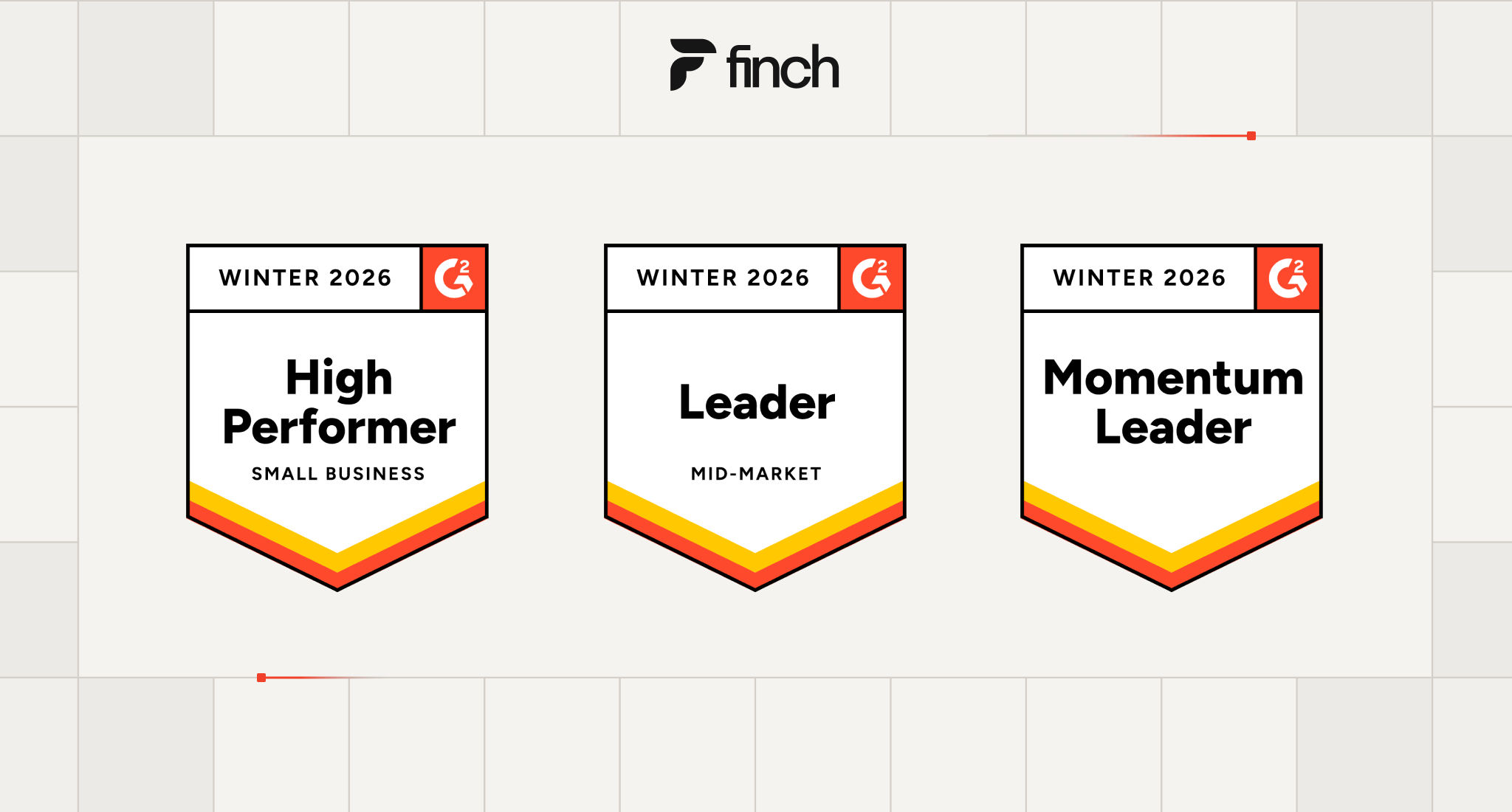
That scale and reliability didn’t go unnoticed: Finch was named a 2026 G2 Leader in Unified APIs and Financial Data APIs, with customers highlighting our deep employment-domain expertise, dependable infrastructure, and quality support.
For enterprise buyers, that combination of broad coverage and proven reliability is critical. Together, our expanding network and third-party validation reinforced Finch’s position as an enterprise-ready platform capable of supporting complex, high-stakes workflows at scale.
In 2025, continued product improvements and a growing reputation of trust helped Finch secure multiple Fortune 500 customers (including two in the Fortune 100): a leading global financial services company, a top three retirement recordkeeper by AUM, and a major employee benefits platform.
Building momentum in Benefits
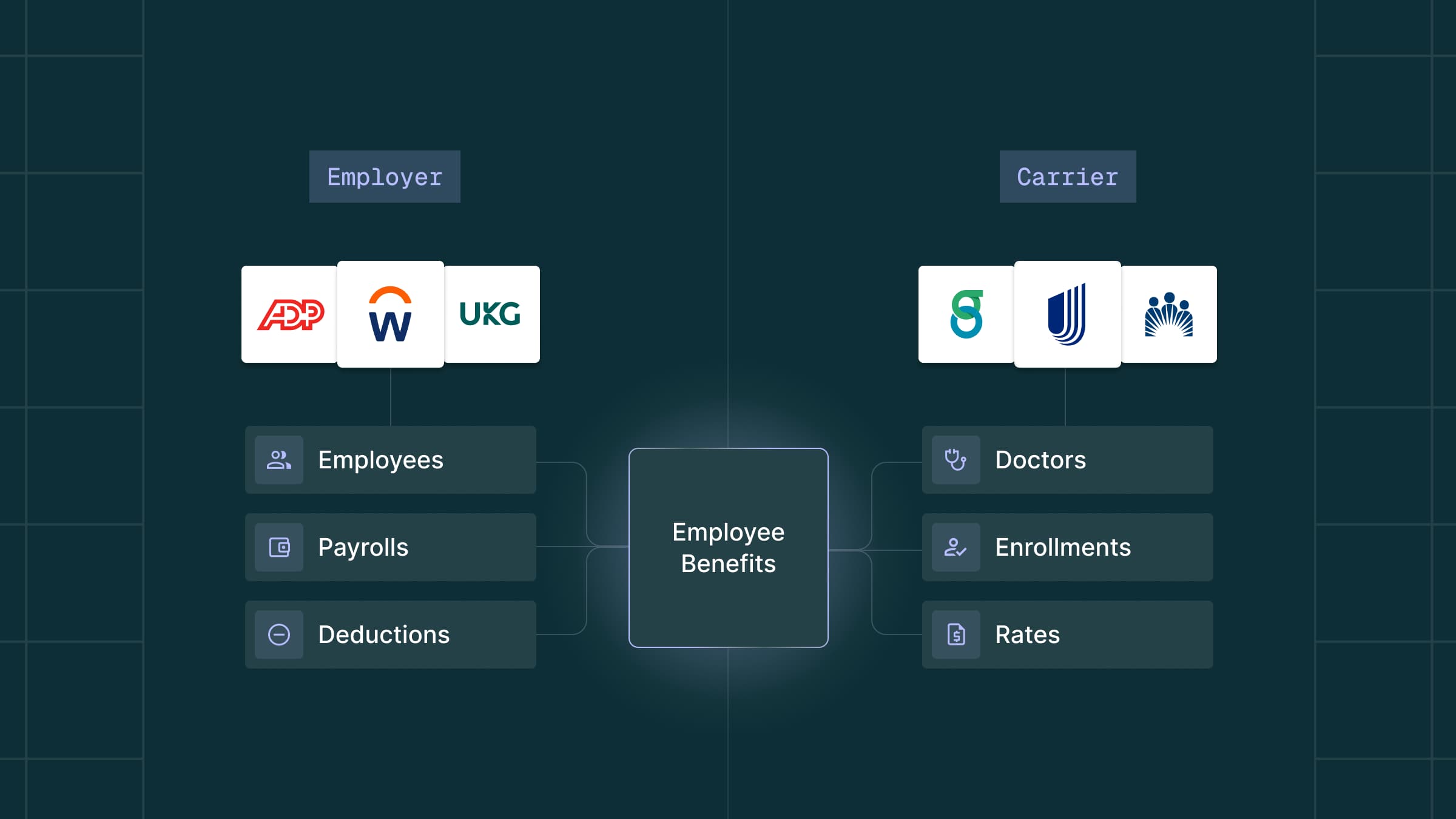
Benefits have consistently been one of the most complex domains within the employment ecosystem. Powering these workflows requires the ability to write changes back to payroll systems, real-time syncs to maintain regulatory compliance, and a level of employee detail that many platforms can’t reliably surface.
These challenges have helped shape Finch’s platform over time, and in 2025 we continued to refine and expand our product to better support benefits-related use cases at scale.
Deepening connectivity in Retirement
Naru Muraleedharan, founder of Stax.ai, an AI-powered operating system for TPAs, shares how Finch's payroll integrations increased client satisfaction scores by 28%.
Over the last 12 months, we introduced new platform features that automate some of the most complex Retirement workflows and launched a native integrations with leading recordkeeping and administration platforms, making these tools available to even more 401(k) recordkeepers and TPAs.
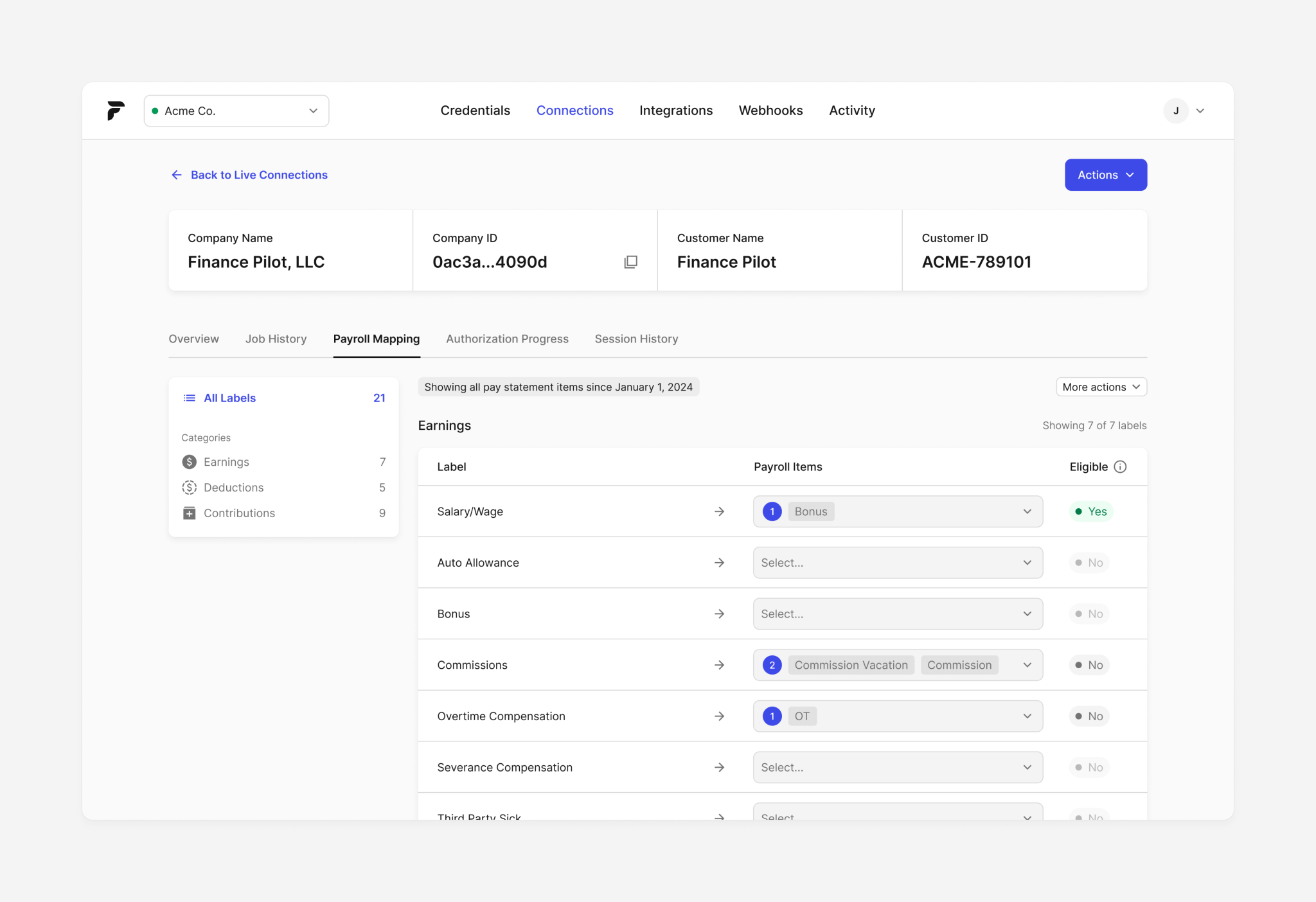
- Payroll Mapping — Users can now assign labels to all the distinct pay statement items that appear in an employer’s pay run from a library of standardized labels across earnings, deductions, and contributions. After the initial mapping, Finch will automatically apply those labels to every future pay run. These labels help normalize pay statement data across employers and payroll systems, creating a shared language and enabling third-party platforms to confidently understand and categorize any line item. Learn more about Payroll Mapping →
- Tiered employer match support — Currently in beta, Employer Match automates the management of employer contributions, whether they’re fixed, percentage-based, or tiered—even if the provider doesn’t support tiering natively. Learn more about Employer Match →
- Expanded partnership with Stax.ai — Finch is now natively embedded in Stax.ai, the AI-powered operating system for retirement plan administrators. Using Finch’s payroll integrations, TPAs can connect to sponsors’ payroll providers and automatically receive clean, standardized data directly in the Stax.ai census and compliance engine. Read Stax.ai's story →
- Native integration with FIS Relius — With compatibility between Finch and Relius, one of the most trusted plan administration platforms in the retirement industry, recordkeepers can now easily onboard plan sponsors and automatically import standardized census and payroll data from the payroll system directly into Relius. See the integration in action with our walkthrough demo →
Accelerating alternative health benefits
Rising health insurance premiums have spurred the rapid adoption of alternative health benefits that offer more affordable, personalized care. Historically, the biggest hurdle to alternative benefits’ success has been fintech challenges, such as managing payroll deductions and contributions—but Finch is rewriting that narrative.
In 2025, we added Section 125 deductions support to Paychex Flex. Finch now supports the ability to create, update, enroll employees in and un-enroll employees from S125 benefits across all of the Top 5 payroll systems, including ADP, Quickbooks, Gusto, and isolved. These bidirectional capabilities are critical to supporting a host of alternative health benefits, from health payment accounts to ICHRAs.
And the proof is in the milestone met this year: following 12 months of rapid growth, Finch now supports a majority of all of the ICHRA players in the market. Our infrastructure delivers the tools needed to scale, including reduced time-to-quote, streamlined onboarding, simple enrollment, and ongoing deductions/premiums management.
.png)
Creating the best employer experience
Building and maintaining robust HR and payroll connections is only half the battle—the other is driving employer adoption. When onboarding is too time-consuming or complex, employers abandon the setup. That’s why we are constantly striving to improve the employer connection experience: to help our customers realize the full potential of their integrations.
Delivering frictionless employer onboarding
.png)
Some of our biggest investments in the connection experience in 2025 included removing friction from the initial authentication through new multi-entity support and building trust with employers through custom branding in Finch Connect.
- Multi-entity mode — The new standard for creating Connections, multi-entity mode allows employers to connect all of their entities—whether that’s two EINs or ten divisions—through a single Finch connection. Multi-entity mode speeds employer onboarding and simplifies management by creating a 1:1 relationship between employers and Finch Connections. Learn more about multi-entity mode →
- Custom branding — Finch customers can now customize their display name and logo within the Finch Connect experience directly from the Dashboard. Recognizable branding throughout the connection flow delivers an enterprise-grade user experience and builds trust with employers, reducing drop-offs and improving conversion rates.
- Authentication workflow improvements — We improved the UI of Finch Connect to improve the success rate of employer connections, including a progress indicator to assure employers their session has not timed out and an exit survey to capture critical insights on the occasion employers abandon setup.
Preserving connection health
Behind the scenes, we made further improvements to boost the longevity of Connections and reduce the need for employers to re-authenticate and saw material gains: 90% of Finch connections maintained continuous access, with disruptions only occurring when an employer explicitly revokes permission or disconnects. At the same time, authentication disruptions fell 80% and now affect less than 0.5% of all new connections, especially for our top providers.
Together, these efforts minimized the need for re-authentication, strengthened the dependability of our connections, and ensured data flows reliably over time.
- Improved fallbacks — Investments in alternative connection paths help to complete the employer connection when the primary provider authentication flow experiences temporary issues.
- Expanded permissions coverage — While still adhering to the principle of least privilege, we expanded our required permissions to extend the lifespan of established connections and reduce re-authentications.
Reinforcing and expanding our infrastructure
This year, we leveled up our architecture to strengthen the speed and reliability our customers demand. As the number of applications building on—and employers connecting to—our platform grew, we upgraded our database architecture, strengthened our integrations to better handle edge cases across provider systems, and leaned into AI, introducing enhanced platform intelligence that makes the data our APIs surface more actionable.
- Intelligent data normalization — Using the millions of pay statement records processed through Finch and years of in-house expert mapping, we built a machine learning model to automatically derive pay frequency and classify pay statement types—data points that are key to our standardized data model for retirement and benefits, but rarely available within payroll systems.
- Real-time data validation — This year, we introduced an enhanced real-time validation layer that runs as data syncs to catch errors or missing fields early and safeguard quality before anything is written to our users’ systems—a major platform milestone that raises the bar for data integrity across every connection.
- Faster Benefits processing — To better support our customers who manage payroll deductions and contributions, we rolled out 2-day processing across all Deductions integrations. This change guarantees Deductions are written up to 5 days faster, enabling our customers to more easily maintain regulatory compliance.
Looking ahead to 2026
2025 was a year of scale and validation for Finch—from record employer growth and deep traction in benefits, to enterprise adoption and meaningful progress in reliability, coverage, and platform intelligence. Our infrastructure now syncs records for nearly 10% of the U.S. workforce, a signal of real market penetration and growing trust among both high-growth builders and Fortune 500 enterprises.
As we head into 2026, we’re building on that foundation. We’re continuing to strengthen our provider network: extending reliability and connection lifetimes across long-tail systems, deepening functionality, and adding new integrations as we work toward our next milestone of 90% coverage of the US payroll market. In parallel, we’re investing further in platform intelligence, flexibility, scale, and durability to meet the demands of our growing Fortune 500 customer base and the larger, more complex employers they serve.
We’re also exploring new capabilities designed to support additional benefits workflows solving for operational pain points across the employment ecosystem and data dimensions that go beyond what’s readily available in traditional HR and payroll systems. These efforts are early but promising, and we look forward to sharing more as they take shape throughout this year.
The employment ecosystem is evolving quickly. Our focus in 2026 is simple: keep strengthening the infrastructure that makes that evolution possible.

97% of HR professionals say it’s important for your app to integrate with their employment systems
Learn more in our State of Employment Technology report ->
97% of HR professionals say it’s important for your app to integrate with their employment systems

Payroll Integrations Made for Retirement