Earlier this month, Congress passed the One Big Beautiful Bill Act (OBBBA) — a sweeping piece of legislation with far-reaching implications for employment policies, taxes, and health insurance.
Many of the provisions are good news for employers: some business tax credits like those for research and development and certain employer-sponsored benefits were significantly expanded, meaning many businesses stand to reduce their tax burden significantly. There’s good news for employees, too — more people will have access to HSAs, and the caps on other pre-tax deductions have been raised or indexed to account for inflation.
From our perspective, this is a massive opportunity for fintech and benefits providers. Expanded tax breaks mean more businesses, particularly SMBs, will seek help from tax credit platforms to determine their eligibility and maximize their deductions. And new federal incentives to offer certain employer-sponsored benefits like HSAs, FSAs, and tax-free education financing will likely drive more employers to offer them to their employees in an effort to attract and retain talent while reducing their tax bill.
We also see this as a prime example of how valuable employment data is. Employers are going to need help taking advantage of the benefits offered through this law: help compiling tax information from various sources, determining eligibility, enrolling employees in benefits, writing new payroll deductions at scale. They hold the data, but the companies that help them take action with it will be the ones cashing in on this opportunity.
Below is a summary of the biggest opportunities coming out of the One Big Beautiful Bill Act, including what the changes mean for employers and how platforms and benefits providers can position themselves to help employers make the most of their potential tax savings.
Business tax credits
Under the new legislation, some business tax credits have been reduced (green & energy) or eliminated (relocation and bicycle commuter benefits), but others have been significantly expanded. These new tax breaks could provide a major boost to employers’ cash flow — especially if they have help claiming them from tax credit software.
Expanded R&D tax expensing
The OBBBA allows businesses to deduct all of their domestic R&D expenses from their tax bill. This is a reversal of a rule that went into effect in 2022 that forced companies to amortize their R&D spend over a 5-year period.
The new law also allows companies to elect a catch-up deduction for all of the remaining unamortized R&D expenses they incurred between 2022 and 2024, meaning innovative businesses can get a major cash flow boost this year by lowering their tax burden. The break for eligible small businesses is even greater — those with less than $31 million in gross receipts can opt to retroactively expense all of their R&D expenses since 2022.
💡 Why it matters: Employers that invest in innovation are newly eligible for substantial credits, creating an opening for R&D credit apps and tax advisory platforms to support them.
FICA credits expanded to more industries
Companies in the food and beverage industry have long been able to deduct FICA taxes (Social Security and Medicare) from tipped wages. The OBBBA expanded that tax break to the beauty and personal care sectors, meaning it now benefits businesses like salons and spas where tipping is customary.
💡 Why it matters: This change opens the door to a new customer segment. Businesses that may never have claimed FICA credits before stand to benefit from tax credit apps that can help them navigate the filing process.
Expanded child care tax credit for employers
The OBBBA increased the child care tax credit — available to employers who offer on-site or subsidized child care to employees — from 25% to 40% (and up to 50% for small businesses). It also raised the annual cap on these deductions from $150,000 to $500,000 ($600,000 for small businesses).
💡 Why it matters: More generous credits may motivate employers to offer on-site or subsidized child care, increasing demand for platforms that facilitate employer-sponsored care benefits or help calculate eligibility for the tax break.
Paid Family and Medical Leave (PFML) credit made permanent and flexible
The PFML credit was set to expire at the end of this year; but with the passage of the OBBBA, this credit was made permanent. Employers can also now calculate this credit in two ways: as a percentage of wages paid during leave or as a percentage of premiums paid for a leave insurance policy.
The definition of a qualified employee was also expanded under the new law to apply to employees who have been employed for at least 6 months, down from 12 months.
💡 Why it matters: These changes make it easier for employers to claim the credit, especially through third-party providers offering PFML insurance or tax credit services. Platforms that support PFML management or help claiming deductions can use this moment to drive adoption.
Employer-sponsored benefits
The legislation also had a big impact on employer-sponsored health benefits, increasing limits for certain FSAs, expanding HSA eligibility, and enhancing some fringe benefits like employer education assistance.
Expanded HSA eligibility
The OBBBA makes several key changes that collectively expand access to Health Savings Accounts (HSAs):
- Telehealth coverage can now be included in high-deductible plans before the deductible is met without violating HSA eligibility.
- Direct Primary Care (DPC) arrangements no longer disqualify participants from contributing to an HSA. The law also classifies DPC premiums as HSA-eligible expenses up to $150 per month for individuals and $300 per month for families.
- More insurance plans, including some Bronze and Catastrophic individual market plans, now qualify as HDHPs that are HSA-eligible. This change will primarily affect individuals on the marketplace, but could have an indirect impact on small businesses and gig platforms by expanding affordable, HSA-eligible coverage options for contractors and part-time employees.
💡 Why it matters: These updates make it easier for employees to qualify for and contribute to HSAs, increasing the value and adoption of HSA platforms and their employer offerings.
Higher limits for dependent care FSAs
The contribution limit for dependent care FSAs hasn’t changed since its inception back in 1986 (with the exception of a one-year temporary increase in response to the COVID pandemic in 2021). The OBBBA not only increased the limit to $7,500 beginning in 2026, but also indexed the limit, meaning it will be adjusted to account for inflation moving forward.
💡 Why it matters: Higher caps make FSAs more attractive to employees, potentially driving more employers to offer them — and more demand for platforms that administer or integrate with FSA programs. Employers will also need to amend their cafeteria plans (S125), creating a near-term engagement opportunity.
Employer education assistance made permanent and indexed
The $5,250 tax-free contribution employers may make toward employees’ tuition and student loan repayments was set to expire at the end of this year, but the new law made this benefit permanent and indexed for inflation.
💡 Why it matters: This elevates educational assistance programs from a “nice-to-have” to a more sustainable and attractive benefit, encouraging adoption among employers and opening the door for new integrations and services from edtech and benefit platforms.
Adoption benefits enhanced
For the first time, the federal adoption tax credit is partially refundable — up to $5,000 per adoption — making the benefit accessible even for families with low tax liability.
💡 Why it matters: Employers offering adoption assistance can now better support a broader range of employees. Platforms that help administer or promote adoption benefits can capitalize on increased employer interest.
How tax credit and benefits platforms can take advantage of the One Big Beautiful Bill Act
The newly expanded tax credits and employer-sponsored benefit changes of the OBBBA offer employers the chance to reduce their tax burdens and leverage more affordable ways to attract and retain talent. But for tax credit platforms and benefits providers, the OBBBA also offers a selling opportunity. If your company falls into either of these categories, capitalizing on this opportunity means you need to be prepared to stand out amongst the competition and to handle an influx of new customers.
To make the most of the One Big Beautiful Bill Act, tax credit platforms and benefits providers should follow three strategies:
- Invest in the user experience
- Automate operations wherever possible
- Deliver world-class data security
Invest in the user experience
Employers are turning to your platform because they’re looking to simplify operations and maximize value. That means your user experience needs to be intuitive, fast, and frictionless.
Make it as easy as possible for your customers to send you their data — particularly sensitive and detailed information like census data, employee wages, pre- and post-tax deductions, leave records, benefits plan documents, and benefits elections. Integrations are key to eliminating manual uploads and reducing the back-and-forth.
A simplified onboarding flow is equally important: the faster users see value, the more likely they are to stay engaged. And by automating time-consuming tasks like documentation, form filing, benefits enrollment, and deadline tracking, you can reduce friction while helping users stay compliant.
Automate operations wherever possible
With OBBBA incentives driving employer interest, platforms can expect to see a bump in demand. Automation allows you to scale operations and revenue without proportionally increasing headcount.
Start by connecting your platform to the systems your customers use for payroll, time-tracking, and accounting via secure integrations. Then, use this data to power self-serve onboarding, generate tax forms and audit logs automatically, and manage benefits enrollment workflows.
Dashboards and reports that update in real time can proactively answer customer questions, dramatically reducing the burden on support teams and helping your internal operations keep pace with growth.
Deliver world-class data security
Calculating tax credits and administering benefits requires handling some of the most sensitive data a business has: Social Security numbers, wage histories, healthcare plans, and more. To earn and keep customer trust, you need to demonstrate a proactive, transparent approach to data security.
That starts with secure data intake via API integrations or SFTP. Encryption should be standard both in transit and at rest, backed by multi-factor authentication, role-based access controls, and zero-trust infrastructure.
Beyond technical controls, empower customers with granular permissions, audit trails, and the ability to export or delete their data.
Integrate with your customers’ payroll systems through Finch
The One Big Beautiful Bill Act reshapes the landscape for employer-sponsored benefits and business tax credits. Finch’s end-to-end connectivity platform enables tax credit and benefits platforms to unlock seamless, real-time access to the payroll and employee data they need to serve more employers, more efficiently.
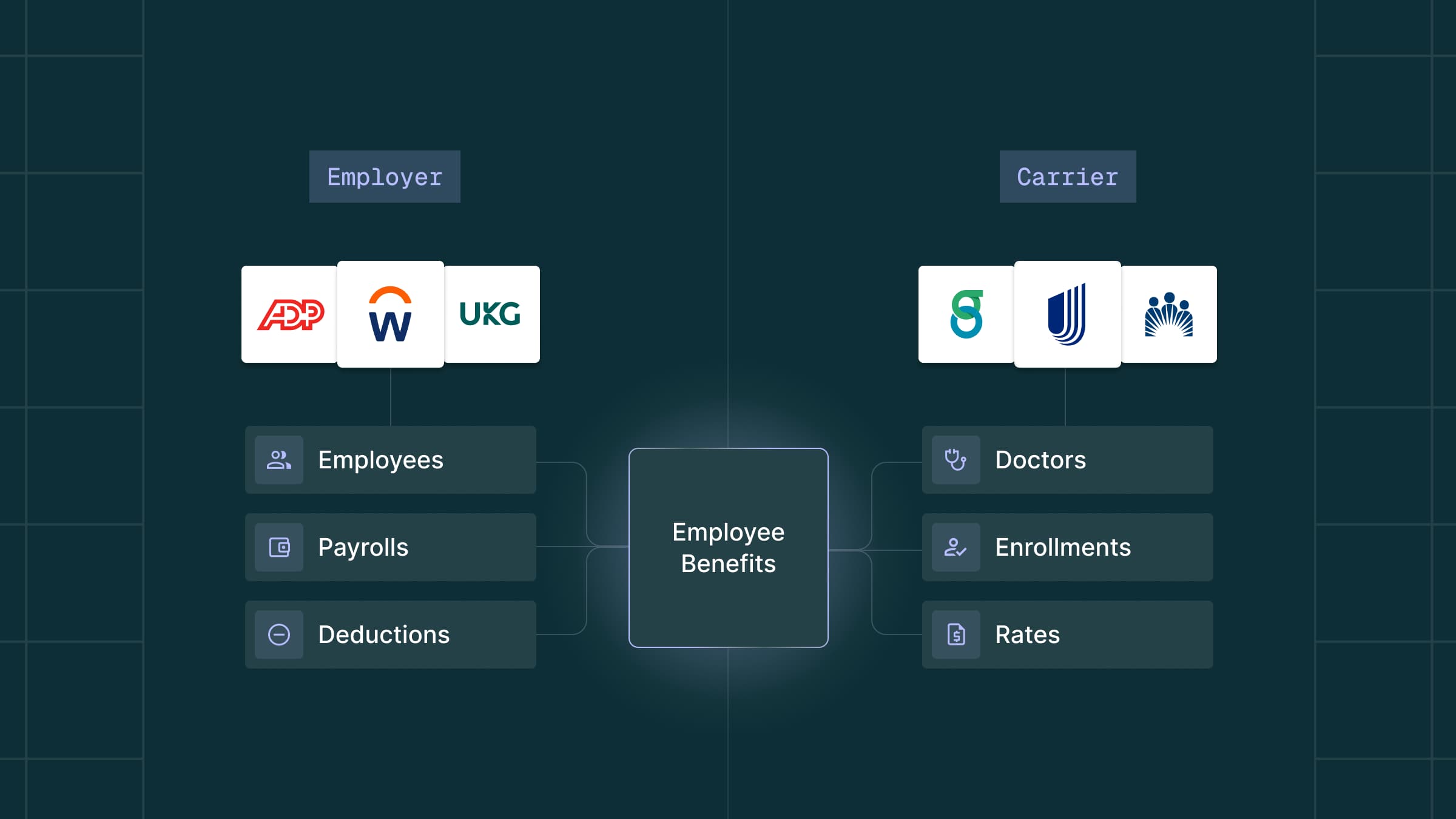
From reading detailed pay statements to estimate eligibility for R&D and FICA credits to automatically enrolling employees in benefits like HSAs, FSAs, and education assistance — and writing pre- and post-tax deductions back to payroll — Finch eliminates manual work and makes integrations effortless.

97% of HR professionals say it’s important for your app to integrate with their employment systems
Learn more in our State of Employment Technology report ->
97% of HR professionals say it’s important for your app to integrate with their employment systems

Payroll Integrations Made for Retirement