[00:00]
Ahmed Siddiqui: So to answer your question, do I believe that the two-week pay cycle is gonna die? Yeah, I absolutely do think it's gonna — it has to die, you know.
-------------------
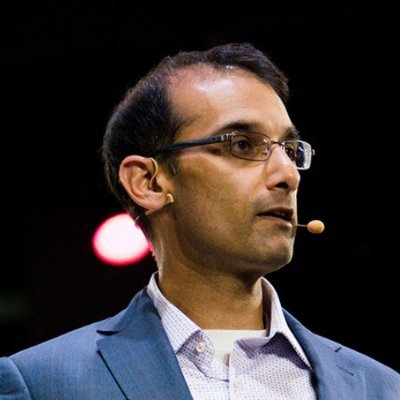
Ansel Parikh: Welcome to another episode of The Current, a bi-monthly podcast exploring the intersection of people, finance, and data. I'm your host, Ansel Parikh, co-founder of Finch, the connectivity platform for the employment ecosystem. And today I'm joined by Ahmed Siddiqui, CPO at Branch, a workforce financial infrastructure platform that gives hourly and gig workers fast, flexible access to the money they've earned. Before Branch, Ahmed was VP of Product at Marqeta, where he helped grow the team from 35 to 150, building card issuing infrastructure at scale. And he's also the author of The Anatomy of the Swipe, a book that started as an internal training manual and became an onboarding staple at companies like Visa, Stripe, and Block, with a sequel, The Evolution of the Swipe, on the way. Ahmed, welcome to the show.
Ahmed: Hey, super excited to be here, man. Thanks for having me.
Ansel: Yeah. And so, you know, going through your background, you've really earned this reputation as being the payments guy. But I've heard you say that when you joined Branch, you thought you were actually leaving payments work behind. I think at that point Branch was more of like a shift scheduling app. And as I understand it, you really kind of started to talk to users and identified maybe that they didn't exactly care about the schedule, but there was something else. It was really about how fast they could get paid. So can you take us back in time, walk us through that moment? When did you know that there was a big enough problem to kind of reorient that whole company around a much more painful issue?
Ahmed: Yeah, so they did care about the schedule, but was it the most pressing issue? Not really. So it was interesting because we were working with a lot of retailers at the time, and schedules typically used to get printed on a piece of paper and posted in the break room. And so for a lot of people, this sounds ridiculous, but this was still happening in 2018 when I joined Branch.
When I joined, one of the first things we did was we actually had some of these users come into the office and we actually asked them a lot of these questions of, hey, what do you like about the app? And we asked them to kind of walk us through how they're using the scheduling app, how many swaps you did, et cetera, et cetera.
And they came back and they were like, you know what? We love the app, it's super easy for me to find my shifts, super easy for me to be able to swap shifts and make more money. But the problem is I still make that money every two weeks. And so, even though they are making more money, a lot of these people are living beyond sort of the paycheck to paycheck. And any little amount of money that would come in — you need gas to get to work, or maybe you need medicine or you need food or whatever — they just wouldn't have enough money in their account to cover it. And so they were like, is there a way that you can just get us this money faster? And that was the sort of aha moment, because we're like, this actually is a payments problem.
Because again, the majority of us aren't paid every two weeks. We typically are either salaried or we're hourly, and we get money deposited into our bank account, which — again, money doesn't move to banks when the banks are not actually awake and working. Meaning that if you've got a job where you're working the weekend, you're not getting paid that weekend. You're always getting paid when it's bankers' hours.
And that actually is what was the major pivot to move Branch from the scheduling shift-swapping app into this sort of workforce financial infrastructure company that we're building right now.
[04:07]
Ansel: Yeah, no, it's really fascinating. And I think I kind of want to pull back to that conversation of, hey, when banks are open is when you really get paid. And I think that is fine for a lot of people that are doing 40 hours a week, 9–5, but there's this new kind of growing population where the shape of work is really changing — gig and hourly workers. But I think we all assume that gig and hourly are kind of lumped in the same category. I think even people in fintech do that. And I know that's something that you flagged is not really well defined. And so I'm curious, how do you kind of break down those two different populations? What are the biggest differences, and what causes someone to choose one versus the other?
Ahmed: Yeah. So again, I think a lot of us who've sort of grown up here in the US, hourly work is kind of the first thing that we typically get maybe out of high school or even college or whatever. It's like, you know, you're working at a grocery store, you're working in a retailer, you're clocking in and then you get a paycheck, right? And that's very typical for a lot of people. And in fact, a vast majority of America is this, right?
But in the last decade or so, we've seen the rise of gig platforms such as Uber, Lyft, DoorDash, Instacart. There's basically an Uber for anything, right? And actually, there's a huge misconception that people think that if I'm a driver for Uber, I actually am employed by Uber. And that's very incorrect.
And so if you are an Uber driver, you are actually a small business owner. And you have the flexibility of being your own boss. So you are not an employee of Uber. You control your schedule and you also control when you can get paid.
And when you have full flexibility like that, you're also getting full flexibility on managing your own taxes, managing your own benefits, et cetera.
Right. And so with gig work, the amount that you're paid is gross, meaning that you are not getting deducted any sort of taxes. You're not getting deducted any sort of benefits or 401(k), whatever. That is entirely on you.
So what it does is it allows you, as a solopreneur or as a small business owner, to get paid for the work that you've completed. And that money is very down to the penny correct for what you should receive.
And the other thing that really was fundamentally changed — and this was really pioneered by both Uber and Lyft — was they gave people the ability to cash out their earnings on a daily basis, which is huge.
And the beauty of it is that a lot of these people are typically working nights, a lot of them are working a lot of weekends, and yet they're still able to get their money. And going back to what we were talking about earlier, the banks are asleep or the bankers are not working on the weekends. So how are they actually getting paid? It's fascinating, because there are modern technologies that have really enabled this functionality. And a lot of it is Visa and Mastercard and the card networks actually building out this infrastructure that got really, really used correctly by Uber and Lyft in the early days.
And now pretty much every gig platform offers this capability. And so now I can work whenever I want and I get paid whenever I want. I don't have this cash crunch issue that I typically have with most hourly workers. So there's a lot of compelling reasons for people to go into gig versus doing a traditional hourly job, if that makes sense.
[08:01]
Ansel: Yeah, no, totally. I think I actually remember reading a stat that honestly kinda stuck with me pretty heavily. I think it was like 61% of gig drivers, for like Uber and Lyft, have borrowed money while waiting on a paycheck.
I'm wondering, have you seen that kind of shift expectations more broadly? Now that there is that flexible option, is that kind of leaking into your hourly workers or people that aren't paid in that kind of on-demand motion?
Ahmed: I think people are seeing what's possible and they're asking a lot of questions to their employers and saying, hey, how come I can't get this money? I've worked it, I've earned it. Why can't I get this money? And it's funny because a lot of us that are on this hourly or even the salary time space, we're paid in arrears, right? And so you've earned it. It is technically your money.
But your employer has just chosen not to give it to you. Where is that money? It's actually sitting with your payroll company and probably collecting interest.
And so you know, I think the employees, they're not dumb. They're asking these questions. They're like, how come I can go and drive for a few hours on Uber and be paid the same day and do similar type of work here and have to wait two weeks for it?
Ansel: Yeah. Given all this pressure, this kind of shifted behavior, or at least expectations, do you think the two-week pay cycle is actually dying, or is it more that it's just optional, because there are other ways to get paid and really get that liquidity versus just having to wait until that accrual happens?
Ahmed: I think — I mean, with hourly workers again, there are real data challenges, I will say. You know, especially around tax calculation and that kind of thing that kind of prevent us from getting paid more frequently. Is it possible? Yeah, absolutely. And there are plenty of companies that are trying to change payroll to be a little bit more modern, which I really think is the right answer — we need to shift payroll to being more frequent, or at least provide a lot more flexibility to the employers.
But in the interim, a lot of the stuff that we do at Branch is we offer the earned wage access, right? So for gig workers, what we do is we typically pay them after the body of work is completed. So, you know, with the Uber drivers, we can pay them after every ride. So a lot of the Uber drivers on our platform are paid maybe 30 to 60 times a day.
A similar thing goes for Instacart. So after every shop, they're paid out instantly. And so we're able to do that on the gig side because we have very good data, right? Like, we know exactly how much to pay them. Now, again, they have to worry about their taxes post fact, but we have very, very good data, very live data. And so that is actually what's allowing us to be able to pay these people out instantly, right?
On the hourly work side, what we typically do is we will get data from the employers. So things like how many hours is this person actually clocked in, hourly rate. We get some other information from their payroll system, other information from even their bank — bank information. And based off of that, we can actually come up with a calculation of roughly how much we can safely provide such that at the end, when they're actually supposed to get paid in two weeks, that we don't overdraw these people.
And so what we do is we give them this offer called earned wage access, where they have available money that they can take. So it's an on-demand type of thing where they can just go ahead and take it as they need it. And so that's how we're trying to fix this solution right now, because ultimately the employers, they are losing people to the gig platforms. It's a retention thing. They have to provide some solution.
So some are doing things like, you know, they're paying out everybody every once a week, which is actually pretty damn good. That's still better than two weeks. But the idea of potentially paying them out every day — the data unfortunately is not fast enough or accurate enough for us to be able to do the types of things that we like doing for the gig worker, for example. But we can get somewhere closer.
So to answer your question, do I believe that the two-week pay cycle is gonna die? Yeah, I absolutely do think it's gonna — it has to die, you know?
[12:40]
Ansel: Yeah. Yeah, I love how you talked about how one of the bottlenecks is the data and being able to actually calculate all that stuff, because yeah, there's overtime, double overtime, different shifts, and it gets pretty complicated very quickly in a very short window of time. But I also want to talk a bit about the payments infrastructure side, right? Because you've written about how ACH, batch cycling, scheduled settlement windows — it's all built for a world that assumed money kind of all moved in a predictable calendar schedule. And now we have to orchestrate real-time payments and there's a bunch of different rails, right? You all have to push to cards, and I think there's RTP, FedNow, and some good old-fashioned ACH is still there. As a payments person, what is genuinely hard about making that instant payment really feel instant and reliable for, say, a worker?
Ahmed: Yeah, I mean, we're in exciting times for sure. I'm very optimistic of all the things that are getting built out. And you didn't even mention stablecoin either. So I mean, there's a whole new world that's coming up there. But what I would say is, yeah, for a lot of people, most of us do get paid through direct deposit, right? Direct deposit still is way better than getting paid with a paper check, right?
So at a minimum, I like the fact that a lot more people are getting paid through ACH direct deposit, but it is a batch-based process. And so it doesn't run on nights and it doesn't run on weekends, right? And so what you need to do is you need to time it in such a way that you're able to get paid in a correct cadence. And so, for example, if you're logging hours at night, I mean, the best that's gonna happen is — well, you won't even get paid the next day. It'll be the following day because you've missed the cutoff already. And then the weekend is way worse, because any earnings that you make over the weekend, good luck seeing that money until Monday or even Tuesday. And if it's a long weekend, that's a whole different story, right?
So that rail — I mean, ACH is gonna be around for a long time. At least in the US. And it's funny because you talk to people that are from other countries and they're like, you guys are so backwards. Right. And we are.
I talked to my friends in India that have UPI or my friends in Brazil. They're like, what are you talking about? Money actually moves in real time 24 by 7, 365 here. And for us, it's like, you know, Christmas hits or New Year's or Fourth of July — any of these holidays, money doesn't move.
So what we have seen is that there are ways, especially with the gig workers, where when the gig platform is integrated into our API, effectively what happens is that Branch is floating the money. What we do is we will float that money for the employer and then collect that money back from the employer at time of payroll run.
So that's how we like to make it available for the employees and gig workers that are on our platform. To them, it should feel instant. But under the hood, there's a lot of financial engineering that we're doing to make it look instant.
[16:02]
Ansel: Yeah. Really getting them access, I think, is also half the battle, right? And I think maybe last fall you all launched Branch Embedded, right? Putting a lot of these tools — 1099 payouts, paycards, things like that — directly inside the tools that workers are already using. How did you kind of decide, hey, this is probably the right way to approach it versus maybe building a standalone app and saying, hey, you can control all this stuff from a separate place?
Ahmed: Yeah, so the way that we operate with a lot of our gig platforms, we still like doing the standalone app because it's a full banking experience. You should really think about it as like we are standing up a checking account for you. And so having that standalone white-labeled app actually works really well.
And what that does is for our partners — such as your Ubers and your Instacart, we've got a lot of nurse staffing companies that we work with — effectively, they don't have to worry about the banking aspects. Branch manages the full picture for them.
But where we found embedding to be really interesting is a lot of these employers, they all have different payroll systems. They all have different time clock systems, timekeeping systems and whatnot.
We said, you know what, we should make our product fully embeddable so that we get to where people are already going versus saying, hey, go and download this other app where you can get your money.
So the embedded strategy has been really awesome for us because it's really opened up a lot of doors where we were having to go employer by employer. Now we've got access to all these employers and it's through the platform that we're able to get them. So it's a really cool distribution strategy. And then the other thing too is that it's living in the place that you're already going to on a day-to-day basis. And I think that's so key.
Ansel: Yeah, yeah, definitely. It's all about trust, right? Because again, if you're touching people's money, they need to kind of have this halo effect of, hey, I already trust to go to this system to make sure I have all this. And if you're feeding into it and you're providing that visibility, you're also making that system more valuable, right? So it's kind of a win-win-win across the board.
So I have a couple last questions, but I think one that is always interesting to hear from someone who's been building this space for a while is that, you know, earned wage access does have its critics, right? And maybe those critics aren't people that actually need earned wage access, but nonetheless, they can be compared to, I don't know, payday lending in a nicer wrapper. Or that maybe instant access encourages people to spend earnings before they've got them.
How do you think about those types of debates? How do you think about the responsibility you have to make sure that this is done in a way that creates the right incentives and doesn't hurt the workers?
[19:04]
Ahmed: Yeah, no, so yeah, we get a ton of this. So what I'd say is number one, earned wage access works really well for those people, which is the bulk of America. Honestly, a lot of people are paycheck to paycheck. Stuff is not getting cheaper anymore. And so it's actually really hard to just do your day to day.
I mean, we see the spend data for a lot of people. And there's nothing in there that I would consider as frivolous, right? They're not going out and buying extra things. It is literally paying for your groceries, paying for medicine, paying for maybe you go out and eat. And most people are not going to super fancy steakhouses and whatnot.
I think generally speaking, most people are fairly responsible and understand what they're getting into. It's just, you know, it is really, really tough out there right now. And the salaries are not keeping up with the inflation. And so people just need money faster so they can do their regular day to day. And I mean, especially with the gas prices being as wonky as they've been, that's such a critical need for most people just to get to work.
So we firmly believe that we should be able to present every worker with options because ultimately it is their money. And we're just the facility to get them their money faster so they can manage their day to day.
And we offer free and paid options, depending on whichever option you want. And so, you know, if you want your money instantly, you can open up a Branch Wallet and get your money there instantly and use it on a debit card — it's free. We don't charge anything for that. If you are adamant that you want your money going to your Wells Fargo bank account or your Bank of America, we give you that option too. But yeah, there is a cost, because there's a cost of moving money, right?
This is a real fact of life. It's much better in this environment for earned wage access to be very fair with people's money than having them go to payday lenders.
Ansel: Yeah. I always like to look towards a future, right? Or building things — you're always kind of looking at the evolution of the ecosystem. And your next book is literally called The Evolution of the Swipe. And so in that, I think you're going to be talking about tokenization of everything and this kind of line blurring between online, offline commerce. So if we zoom out to how that maybe applies to how people get paid, what does the workers' relationship with their earnings look like in, say, five years from now? Is the paycheck going away, or is there something else that you think is going to be that shift in that relationship?
[21:57]
Ahmed: Yeah, I think consumers — just anybody in general — is expecting everything to be digital and available instantly on their phone or on their watch, so to speak. So pay, how they're getting paid, has really not caught up with that. And for the longest time, people still get paid with the paper check. That's so mind-blowing to me.
And so being able to get access to your money instantly on your phone — the way you have to think about it is, yeah, I maybe had a bank at some point, but now your bank is on your phone, or maybe the other way around, whatever that is. But ultimately everything is moving digital. Everything is moving to a point where the data is just getting faster and faster and better and better.
And so where do I see the world going? Yeah, I absolutely believe that pay will happen in much higher frequency. And if we can get to a point where regular shift work starts looking more like gig work, right, where you're getting paid for the body of work that you completed, I think that could really open up a lot of doors for a lot of people, because I think generally speaking, people love flexibility and people's lives are just getting more and more complex. And so how can we provide that same level of flexibility to just a regular hourly worker?
Maybe you and I work at the same factory, right? You crank out 100 widgets a day. I crank out 50 widgets a day, but we're getting paid the same. I mean, something's gotta give, because you're gonna be like, what the hell? I just made 100, you made 50, we're still making the same amount of money. Maybe they should give you flexibility, like leave early if you can. Maybe you just are supposed to do 50 widgets a day, and you know what, it takes me just longer. It takes me eight hours. It takes you only four hours. So maybe it gives you flexibility in just working the four hours, or maybe you get paid per widget created.
You know, I think if the data can get better, I think we can move to a world where that happens. I think people are just demanding it. And so I don't think that this is really that far off or so groundbreaking. I think giving people as much flexibility as possible on the kinds of work they do and also how they get paid is really critical to making this happen.
Ansel: So one final question. Given everything we talked about — these shifts in how people get paid, the shifts in behavior or expectations towards getting paid more timely — how do all these shifts change what your job will look like in five years?
Ahmed: Scary to think about. But yeah, I mean, I think for people that are sort of in the payment space, I always tell them it's always evolving. And also the use cases — maybe some payment instrument was designed for one use case, but now can be applied in a completely different way in a different use case. And so it really will be how adaptable can you be as these changes are happening. Right? If you're not adaptable, it's gonna be a problem.
And the reality is, like we were talking about earlier, stablecoin is really interesting. Something's gonna happen, and most likely it's not gonna be a use case that we probably thought about. And again, the vast majority of people actually have no idea what the hell this thing is, but you know.
I think somebody's gonna find that right use case and position it in such a way that everybody's gonna be like, my God, I have to have this.
Ansel: Yeah, no, I'm pretty excited for that. I think there's a lot of potential, definitely a lot of education on how this works, why it's better in certain use cases. And I am excited to see, as things evolve, how that's applied. And so I think it's been really exciting having you here, getting to talk about the future of work, the future of payments, how those combine. And I'm really excited for your book. So I've already pre-ordered it, and I encourage anyone listening to do so as well.
Ahmed: Thanks again for having me. This is so much fun, Ansel.