[00:00]
Jeff Rosenberger: I think there's an element of naivete or almost recklessness in starting a company.
It helps to have some remove from the space. So you do think about things differently, right? Cause if you're just going to come in and kind of do it the way it's already been done before, you're just not going to get a lot of traction. You're not going to get away. You're not going to do anything really disruptive.
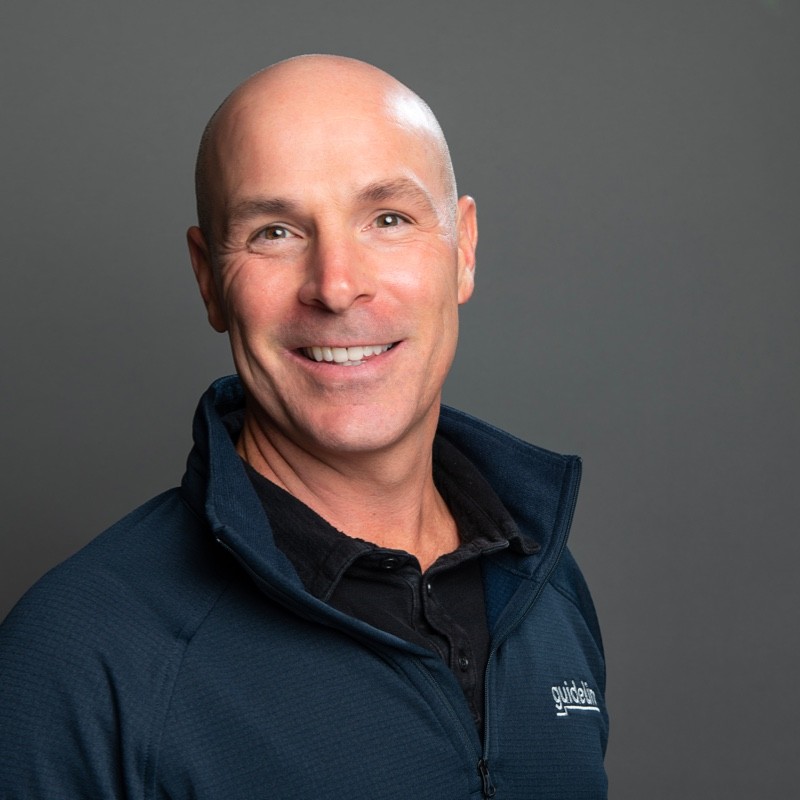
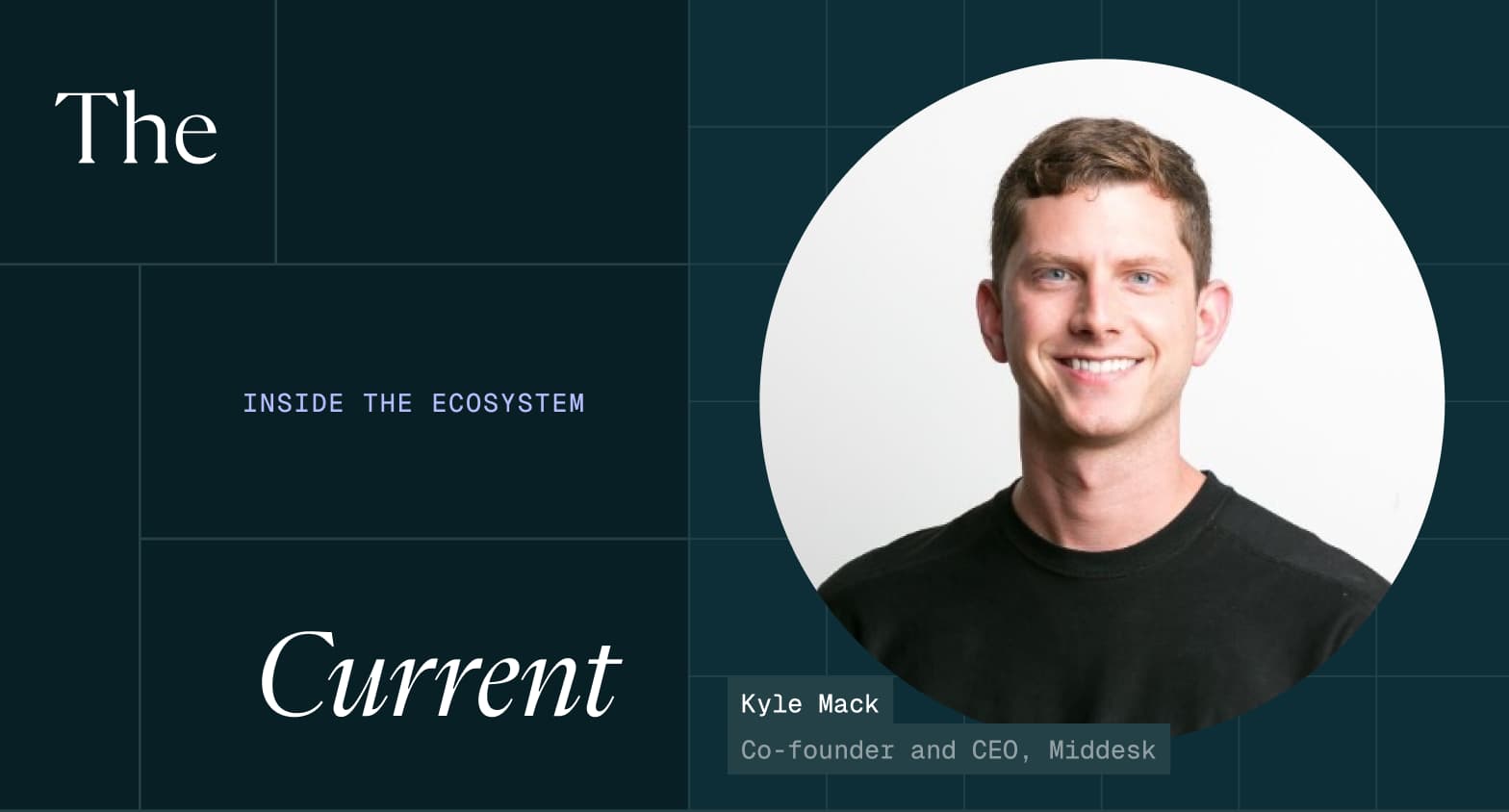
Ansel Parikh: Welcome to another episode of The Current, a bi-monthly podcast exploring the intersection of people, finance, and data. I'm Ansel Parikh, co-founder of Finch, the connectivity platform for the employment ecosystem. And today I'm joined by Jeff Rosenberger, a veteran of the fintech industry who led business development at Wealthfront during the company's pivot to automated investments and led product strategy at Earnest before it was acquired by Navient. For the last nine years, Jeff served as the Chief Operating Officer at Guideline, where he was instrumental in growing the platform from a small startup to a leading 401(k) provider with billions of dollars under management.
Jeff, welcome to the show.
Jeff: Thanks for having me, Ansel.
Ansel: Yeah, I'm really excited to have you here and really excited to dig in and learn a little bit more about your journey growing Guideline to what it is today. But before we get there, you've had a really interesting career path up to this point. So I'm curious, what was the aha moment that made you want to join Guideline? What did you see early in that product or the team that made you say, hey, this is something that could be really big?
[01:28]
Jeff: Yeah, I mean, I think you hit on it right there, which is first and foremost about the team. You know, I first got introduced to Kevin Busque early 2015. So I met him a couple of times in person, and then the CTO and co-founder was in Portland, Maine. He actually came out for some meetings they had, and I met with him as well, Mike Nelson. And then the third co-founder, Jeremy Caballero, was kind of the design and product leader. And I really liked the three of them a lot.
I liked them together, the three of them, liked how they interacted. They had all worked together at TaskRabbit before, and were excited to do it again. So there was a level of trust and understanding and complementariness of their skillset. But then I also felt like I could really help them out, because I had worked at Wealthfront and in and around many financial products before that. And so to me, it was kind of obvious — I could help these guys build it out. And they had, at that time, three full-time employees working with them. So it was just a team of six. So super early.
And then the product, it was just clear that there was something there. I had some initial context and understanding about the opportunity for the 401(k) space, because even when I was at Wealthfront, I would go sometimes with Andy Rachleff, who was the founder at Wealthfront, and do these investment seminars. And then I did a bunch of them myself, and I would go to these companies, and a lot of times they were getting liquidity for their employees and they wanted to make sure their employees had some basics around how to invest. So we gave a very non-salesy presentation or seminar, like, here's how you do it. And then someone would go like, "Hey, what does Wealthfront do?" And we'd kind of be like, okay, now you gave me permission to give you the 30-second sales pitch.
But what I kept hearing from the execs after we'd wrapped that up is, when are you guys going to build 401(k)? When are you going to build 401(k)? And so I left Wealthfront mid-2014. So when I got introduced to Kevin early 2015, I kind of had a prepared mind.
And then I think the other thing too about all these things is — and I learned this actually from Andy Rachleff, and I think the really great investors all kind of think this way — there's lots of really great ideas out there for starting businesses. I think one of the most compelling things is, why now? What's the situation or the institutional environment that makes sense to do this now?
You know, I think for Kevin, he was pretty articulate and like, "Hey, we can build these integrations using APIs. Really deep integrations." I'm not as technical as a co-founder, so I didn't immediately understand what he meant about that. But then I realized the big advantage was that it could allow you to lower the cost of service. And then ultimately, through the channel partnerships, the cost of acquisition as well. And so this'll be entertaining for you, but at that time, Gusto wasn't even Gusto. Our very first partner was ZenPayroll.
And so Kevin was already talking to them. I worked as an advisor first, and over the course of most of 2016 helped him think about how to craft and negotiate that partnership, along with some other things. Back then, Gusto was ZenPayroll. They had about 30,000 businesses on their platform. I think they have about 500,000 now. So there was an element of luck to that too, which is good timing. But they were really looking for a partner who could kind of co-develop these APIs and build really deep integrations.
The one other advantage that we had was Mike Nelson. The CTO was very technical, and he's kind of the fabled 10x engineer. He built the backend in such a way — the record-keeping system — where you could really integrate very tightly between the Guideline 401(k) system and then the Gusto payroll system on the other side. And I know Finch — yeah, it's done a really, really great job driving into this opportunity and scaling it for other business lines in different industry areas and stuff.
I think that was really powerful stuff. I think the one thing that sat on top of that also was the sort of business partnership or business relationship that we had with them. They were growing. They had a bunch of backlog of demand. And so they would kind of point that to us. So it was not only the product and the timing of these developments of these third-party APIs, but it just seemed like coming together. I'm like, great team, great product, right time, I could see how I could help them. So I was an advisor for a little while, and then ultimately in October 2016 joined as the Chief Operating Officer after they raised their Series A around that summer.
[05:32]
Ansel: Yeah, no, I love that. I mean, that's super helpful context. Also, I love that you're joining when it's a single digit number of people and you know every person's role and it's like the minimum amount of people required to have a fully regulated business that has proper clearance and certifications on the team. So, you know, I think what's also interesting — at no point in this did you talk about, hey, you know, one of these people, one of the co-founders who are experts in this industry. In fact, everyone was kind of building and building that context in an industry that has kind of been doing the same thing the same way for decades. And so I'm curious, you join in — how did Guideline's investment strategy differ from the rest of the industry, which again, has been pretty static since I'd almost say the 80s?
Jeff: Yeah. Let me just say one thing on your point. I think there's an element of naivete or almost recklessness in starting a company. You're an entrepreneur. I've never actually started a company. I'm very good at joining entrepreneurs very early on, where I can see this coming together kind of right around the Series A when it was six people. And that was very similar to when I joined Wealthfront. I do think it helps to have some remove from the space. So you do think about things differently, right? Cause if you're just going to come in and kind of do it the way it's already been done before, you're just not going to get a lot of traction. You're not going to get away. You're not going to do anything really disruptive.
So yeah, to your point on the investment part of the product, which is your question — you know, Kevin had this mindset of, "Hey, why would we charge asset-based fees at all? Right? Let's do this differently." And then, "Hey, we have this opportunity to do the investment solution differently as well." Wealthfront and Betterment had both championed and started this kind of robo-advice space, which had gotten a fair bit of attention. And so it was pretty clear that, hey, we could actually build out a robo-advisor now, just instead of a direct consumer model — you know, like Wealthfront or Betterment or others — we could actually do it in a B2B model in the 401(k) space.
You know, that was pretty cool. So it ended up being six investment models. They were diversified portfolios of index funds or ETFs, and it's kind of boring stuff in a way, cause it's like, hey, just put your money in. You don't have to think about it. We'll take care of it for you. But most people actually want to invest that way. Got day jobs, kids, families, other responsibilities and stuff. And maybe other outside accounts — maybe they have that Robinhood account or whatever that's kind of their play money. But for their retirement money, it's nice to know you got some professionals and licensed people that are working to keep this really low-cost, diversified, you know, very long-term-centric kind of strategy. So, yeah, that just kind of evolved from there.
And even at the time we did not charge any asset-based fees at all. So it was really interesting, because our solution with the six managed portfolios of the ETFs — primarily Vanguard ETFs, pretty much the whole way — they were actually lower cost than if you took a target date fund, like the packaged kind of retirement fund from Vanguard. So I guess I'll say one thing — at Wealthfront, we use ETFs because it's very easy on that kind of platform. On the Guideline platform, on 401(k), it's actually easier to plug in on the backend with 40 Act funds. So we use more traditional index funds, but they have their ETF equivalent. Yeah, it was pretty cool. It's pretty great. And the co-founders were already kind of down the path on doing that when I was joining. So it was more like, hey, I was licensed as well — with the Series 65 I got in my time at Wealthfront — since I effectively became the Chief Investment Officer of the solution. And it was pretty cool to see it scale to a billion, and then 10 billion, and ultimately 20 billion at the time of the acquisition.
[09:03]
Ansel: Yeah, I'm curious — when I look at Guideline, one of the things I really appreciate is just how it's very consumer-friendly, right? I think, especially when you think about the experience at the more traditional providers out there — it's like, okay, I don't really know what I'm signing up for. I have to read through a lot of things. It's definitely designed with a very user orientation, that I think a lot of times, when I talk to companies, especially B2B ones, if they have someone that has some experience on the consumer side like you do at Wealthfront, you take a little bit of these learnings that I think aren't actually the DNA of a B2B company. So I'm curious if there was any interesting — I wouldn't say hacks, but things, learnings that you got from Wealthfront that you're like, this is something that's gonna translate really well to what we did at Guideline, given that, you know, you have small businesses that are maybe not super literate on exactly what a 401(k) is and how to set it up.
Jeff: Yeah, I'm not a designer by trade, but I feel like I know good designers and marketers when I see them. So I'll say that I had that perspective, but I will also give a ton of credit to Jeremy Caballero, or Cabs is his nickname. The third co-founder is kind of the product and design leader. But I think Cabs is really great. He is very focused on user-centered design, and to your point — both the B2B side of, hey, how do you help a small business owner with eight employees who's never signed up for 401(k) do this without too much brain damage? Just click through. Understand the questions you're asking. You're prompting them. You're trying to take decisions away where they don't really matter. Keep it simple.
And then the layer through that is, now the business owner has signed up, set it up, authorized the payroll integration with Gusto or whomever, QuickBooks or Rippling or whoever. Those are the three biggest partners ultimately for us. But set up that integration, just kind of click through that process. Very transparent, try to keep that a couple of minutes. But then after that, we would auto-enroll the employees.
And then when they got that notice, it was intended to be just really transparent, really clear — assume they basically had never invested before. And I think to your point, the co-founders had never worked in the retirement space or even in the finance space. In some ways, I was a bit of the expert, but I'd never worked directly. I'd only been a 401(k) participant. So I think it was pretty cool because it was just the level of innovation and how quickly we moved in those first three, four, or five years was actually really, really a lot of fun. And so I do think you're touching on an important thing — how do you meet people where they are? We did also have auto-enrollment, which is very much like an opt-out system for the participants. So if they never engaged at all, they actually got auto-enrolled, and they had to make an affirmative decision not to. But that would be — I think it was about a third or maybe 30% of the participants were totally passive. Everyone else basically was like, oh, I'm being auto-enrolled, and would engage and typically go through our kind of robo-advice questionnaire — get the portfolio set up. Yeah, I think keeping it simple and keep the jargon out, I think is really important too.
Ansel: Yeah, no, that makes a ton of sense. Yeah, I like that you can never make it too simple, right? Especially when you're just trying to make sure that people get clarity on value and understand, what do they need to do? Why that matters? The sooner you can get to that and cut through all of the — I think jargon is definitely something we've learned. And especially in the 401(k) space, there is a lot of acronyms, a lot of jargon. So it's easy to fall into that.
Jeff: Yeah, I think the other part of that too is, we were very much like a bundled — what you call in the industry — a bundled provider. In the sense that, you know, Kevin had the mindset of, hey, let's go — kind of the other term you heard, you'll hear for this is full stack. It's like, okay, let's either build it or let's go negotiate with the third party that we need to on behalf of our clients. Right? Like we had a business relationship with Vanguard, but there's actually no contract there because we use off-the-shelf products from them. Right? But we had to work with a trust company and plug in, you know, to State Street for the end assets to be held. So it's like, people don't need to think through that. We're just like, hey, your end assets are held at State Street. You're going to see the ACH is going out there. We'll provide you with your statements. There's third-party verification of your account information. Like, okay, done. We're using low-cost Vanguard index funds and then a diversified portfolio. People are like, okay, great, next question, right? Just keep it so simple. It's like, just reduce the kind of cognitive load for the customer or would-be customer.
[13:15]
Ansel: Yeah. And so you've done — I feel like you've made a lot of micro decisions that lead up to this scale. And so you went from a startup to the third-largest source of new 401(k) plans in the country. And so I'm wondering, we were talking about the 10-year overnight success — were there one or two key decisions that helped drive that inflection to this type of scale? Since again, few people get to be on that type of ride and you got that front-row seat for the entire time.
Jeff: Yeah, I think there were a couple of things. Kevin and the co-founders had already started down the path with ZenPayroll. So I helped Kevin negotiate that initial contract. One of the first things I did when I came in was renegotiate that contract. So I think it's really, really just investing into that relationship beyond the ongoing technical partnership too. We did a great job on the technical side doing a lot of what your firm does, of just making sure the integrations work really well together.
I do remember another really critical decision, which is — around that time Parker Conrad had left Zenefits. It was like, you know, there's a lot of kind of smoke coming off of all of that. And I don't really want to get into all that here. I know Parker a little bit, but I also have some friends in common with him. And so it was pretty simple to have a discussion with him. And I think it was like, Kevin and I were like — at that point, it's hard to imagine now given Rippling's success, but we were sort of like, hey, is this a good idea, you know, to get partnered up with them? And we were like, you know what, that guy is a hell of an entrepreneur, and we think they can really, you know, potentially scale this up. And there's an opportunity in that particular part of the market. But I remember having that thought of — I think it was one of those things where we were early enough, where it's easier for us to take a little more risk. And we made the right decision to be like, yeah, he might pull this off again. And you know, he did, to his credit and the team. I think that was a really critical point.
I think the other thing too that we haven't touched on — and this is an area where I spent a lot of time — was we did lean a lot on public policy, in part because it was moving a lot in the retirement space. So back to that question earlier, discussion earlier on, like why now? Is it a technology breakthrough? Or you know, in our case, in this space could be, oh, now there's ETFs where you can trade these things on platforms that are kind of platform-agnostic, right? There can be steps forward in product that are less technical as well. But what are the technical and product breakthroughs? And then I think also either interest rate environment or kind of cyclical things that provide, you know, great tailwind. And then also kind of on the policy side, there were major pieces of federal retirement legislation that were passed at the end of 2019. Uh, that was actually President Trump that signed that. And then at the end of 2022, that was the SECURE Act, and then end of '22, Joe Biden signed the SECURE 2.0. And so there's a lot in both of those, but there were some things that just, hey, greater tax incentives for starting new 401(k) plans, more leaning into auto-enrollment and other auto features like auto-escalation, which — we were skating to where the puck was going in a lot of ways there, in both our pricing model and that we already did auto-enrollment. So it was really leaning in on all of that.
[16:53]
The Starter K was an example of a kind of accessible — it's almost like an IRA delivered through a 401(k) where there's no employer match. It's kind of stripped-down 401(k). That was really great. That was in the SECURE 2.0. And we were first to market in 2023. And I remember a discussion we had internally debating, hey, should we do this? Should we build this? And I was a big advocate for it, one of the other really senior product folks was a real big advocate for it. And you know, we went round and round, like, hey, are we gonna be able to make money on this? It's gonna need to be at a really low cost point. But what we realized is that they're going to create a market segment that sits between these state programs like CalSaver and so forth — which are these auto IRAs, Roth IRAs — and then the kind of more traditional 401(k), which for Guideline, most of those were Safe Harbor plans, which included or required an employer match of 3 or 4%. So it's like, hey, there's a product space potentially in the middle where an employer can't match, but the employer can actually pay all the admin fees for this and can have it be a really great technical solution versus working like a state program like CalSaver or OregonSaves.
So I think a couple of those key product decisions were really, really critical. I think betting on some of the partners at the right time — Intuit took a lot longer than we expected. We were working on that for years. But we never gave up. We were very resilient. We kept working on it. We also refused to do a bad deal. I mean, they negotiated really hard and we had to just wait, cause they wanted us to sign this bad deal. And I remember leaving a restaurant in Portland, Maine from a dinner, and — it was earlier out in California — and talking to the kind of partnership person at Intuit, and she was negotiating really hard, and I basically just told her straight up: "We're not going to do a bad deal. Cause if we do, it's bad for the company. And I won't even be the person you're dealing with here a year from now. So I'd rather do no deal, or just wait and we will do a good deal, and we'll do a win-win deal. And that will work for you guys and for us."
So I think getting some of those key decisions right, I think were important. I think there's some mistakes we made too. I do think we charged no asset-based fees for most of the company's — or the first half of the company's life — before we got acquired. I kind of think that was a bit of a mistake. Switching away from that was a mistake, because it kind of made us look a little more like the rest of the marketplace, even though we didn't charge nearly as much asset-based fees. It boosted our revenue. So that was 2021 that we introduced an asset-based fee. It was really low, and we thought, okay, well, that's fine. But I do think it kind of took away some of our brand differentiation. In hindsight, I wish maybe we had done that a little bit differently, or maybe just found some other way to put it into employer fees — or even if they could put the participant fees in terms of fixed dollar amount, the SaaS fee onto the employees. That would have been more elegant and we could have kept our brand halo of that. So yeah, you learn some of these things the hard way too.
[19:05]
Ansel: Yeah, that's the challenge of startups. You kind of have to do it to see what happens and then kind of learn from mistakes as you go. But maybe the thing on — maybe the broader industry, and it's just something that I've noticed personally as you kind of start to see the emergence of robo-advisors, right? Wealthfront was one of the pioneers of that. But now you have a lot more companies that are starting to offer investment-type services. Obviously, you have Robinhood coming in to really democratize trading and things like that. So there's just this whole new generation of retail investors that are very active in the stock market, whether it's investing in meme stocks or actually building portfolios. A lot of them, though, are also learning from non-accredited influencers, right? It's not like how you or me learn from an advisor or someone that at least has credentials. So I'm curious — you take a step back of this shift in behavior, what do you think of the implications of having this bigger retail, you know, investor base, but that there's maybe fragmented education? What does that have on the impact of the retirement industry? Does that drive participation? Does it create weird risk tolerances? I'm curious how you think about it.
[20:12]
Jeff: I think probably a bit of both. I mean, I do think I have a lot of respect for Vlad and what the team have built there over the years. I mean, obviously it's just a juggernaut. It's really impressive. And I think that insight of just, how do you make it — back to the point — and make it simple, make it more accessible, in this case, you know, mobile first — a ton of respect for that. And I do think it's probably drawn a lot more interest in people in, right? I do think there is a question of, well — if it's too much fun, is it really good in investing? And I'm generally — this is to sound kind of stuffy, but I'm kind of like, I think often not, right? I think you're kind of better off, for the most part, having a diversified portfolio, keep it low cost, hold it kind of over time. But I'm not an absolutist on that. I think if people have, you know, a couple percent of their net worth or whatever in a Robinhood account and they play around with stocks — I'd be very careful with anything with leverage or options. I think you even need to be really careful, because some of that stuff can be very tricky.
But if you just dabble and trade some stocks here and there because you have the time and interest in doing it, you know, as long as you know what game you're playing — and in many ways it's the most competitive game in the world, right? The hedge fund managers are just about the most well-compensated people in the entire world, so that's who you're kind of competing against. So if you want to play around a little bit on the side, I think that's fine. I think in terms of your core investments, your long-term investments, your retirement — I think it's important to do that pretty thoughtfully.
The one thing I'd say about it is, you know, if you're always into — you're spending too much of your life and too big of a rush to get wealthy by trading stocks or whatever, you might actually miss the real opportunity, which is just do it slowly, repeatedly. I was just looking up before we jumped on — there's like $48 trillion in the US retirement system. That is a juggernaut. An absolute juggernaut. There's like $19 trillion in IRAs. That's the single biggest chunk. Trillion with a T, right? And then retirement plans are like $13, 14 trillion, including 401(k) plans. And so I just think, hey, as long as most of that $48 trillion is invested mostly in stocks and continuously held — and I do think that's one of the reasons why the US stock market, robo-advice and retirement plans, and more auto-enrollment, and more employers matching — I think that is part of the reason why this market kind of seems a little unstoppable.
[22:30]
Ansel: So last couple of questions, I'll let you go. I think you all have been — at your time at Guideline, you've been the driver of innovation in this industry that, again, hasn't changed a whole lot in decades prior. And so I'm curious, from your vantage point, what does the future of the retirement industry look like? Are there certain opportunities to build new things? Is it really about improving and iterating on what exists? I'm curious just how you're thinking about it.
Jeff: I think there's kind of three, three or four areas that I'm kind of focused on. I do think continuing to kind of watch crypto — and I'm no expert on that. I'd like to see more innovation that obviously, is great, this actually really moves the financial system forward in more obvious ways. So, and maybe I'm not paying enough attention to the space to know that that's already happening. But I'd say I continue to watch that. I do think AI I think is important. Like, you know, how are people — I think people are going to, you know, ChatGPT, Gemini, you know, Claude, asking financial questions, tax questions. I think you should be a little wary about putting some of your data in there. But I also think that's human nature. And I use it to do research and stuff. So I think that's very natural. The question is if our financial advisor is going to use that. And then what does that look like? So I think there are different delivery modes of how financial advice can come through AI, and hopefully most of it is good and gets better over time. I think the AI space is one to watch.
I do think, you know, I mentioned the IRA numbers at $19 trillion. I do think there's more and more money there. There's generational wealth transfer going on there too. So I think there's kind of macro financial kind of things. And then I think the last thing is in just an interest area for me — how does the policy evolve, right? It's going to be probably this round of Senators that get voted in who actually will have to put their hands on the Social Security system, or we'll get to the point — I think we're within that timeframe in which, by default, you know, they'll cut benefits down from 100% to like 80%, unless they pass some legislation to change all of that. So I think, what's the policy change on to make Social Security more robust? I think it plays a really important role in a lot of people's lives and is very, very popular.
So I think, yeah — it's a long-winded way to say I think policy is something to just kind of keep track of. Cause especially around financial products and major technology products, it can have enormous impact.
[24:45]
Ansel: Yeah, I definitely am. So I have one final question for you. Given everything we talked about today and all the different shifts that are happening in the industry, what will your job look like in five years?
Jeff: Right now I'm taking a break. After the acquisition happened — I don't know. Let's check back in in the fall. But I do think, so that, I have stepped away from Gusto after a couple of months after the acquisition. That acquisition was November of last year. And then I was there for a couple of months afterwards. And now the second half of our transaction — which, we sold the non-Gusto payroll side of the business, or customers not on Gusto payroll, off to Vestwell. That's closed. So it's great to have that all now behind us. And there's a good chunk of the former Guideline folks at Gusto, you know, helping to drive the Gusto 401(k) platform forward.
Yeah. So for me, I don't actually know. I do think the AI space is interesting. I mean, I sort of, going back to your prior question, which is, where is the innovation going to come from? I really like financial products. I've worked a little bit in lending. I've worked mostly — I spent the biggest chunks of my career at Wealthfront and Guideline. I do think the kind of asset management space is interesting. I do have a lot of respect for what Robinhood and Vlad and the team have built there. Some of it honestly scares me just a little bit, but I think it's actually also, you know — they've made it, they've drawn a lot of people in and got them going sooner. Hopefully a lot of those people then, you know, invest more seriously as they get further on in their careers and lives and stuff. So I have a lot of respect for what they've built. So I always keep a close eye on what they're up to. I'm still a shareholder in Wealthfront. They went public recently. I like that they're continuing to innovate as well. I think I'm keeping a close eye on both of those companies. And then what other companies spin up from here and start innovating. So yeah.
Ansel: Yeah, well, we'll definitely check in, kind of follow your journey. And it's super exciting to have you. So again, thank you so much for coming in and talking about your journey as well as some of the interesting evolutions that are going to happen over the next five years as well.
Jeff: Yeah, you bet, Ansel. That was fun. Appreciate it.