
Payroll Connectivity: The Edge Behind AI-Native Fintech
How granular payroll data became the infrastructure advantage powering the next generation of finance software
What you'll learn
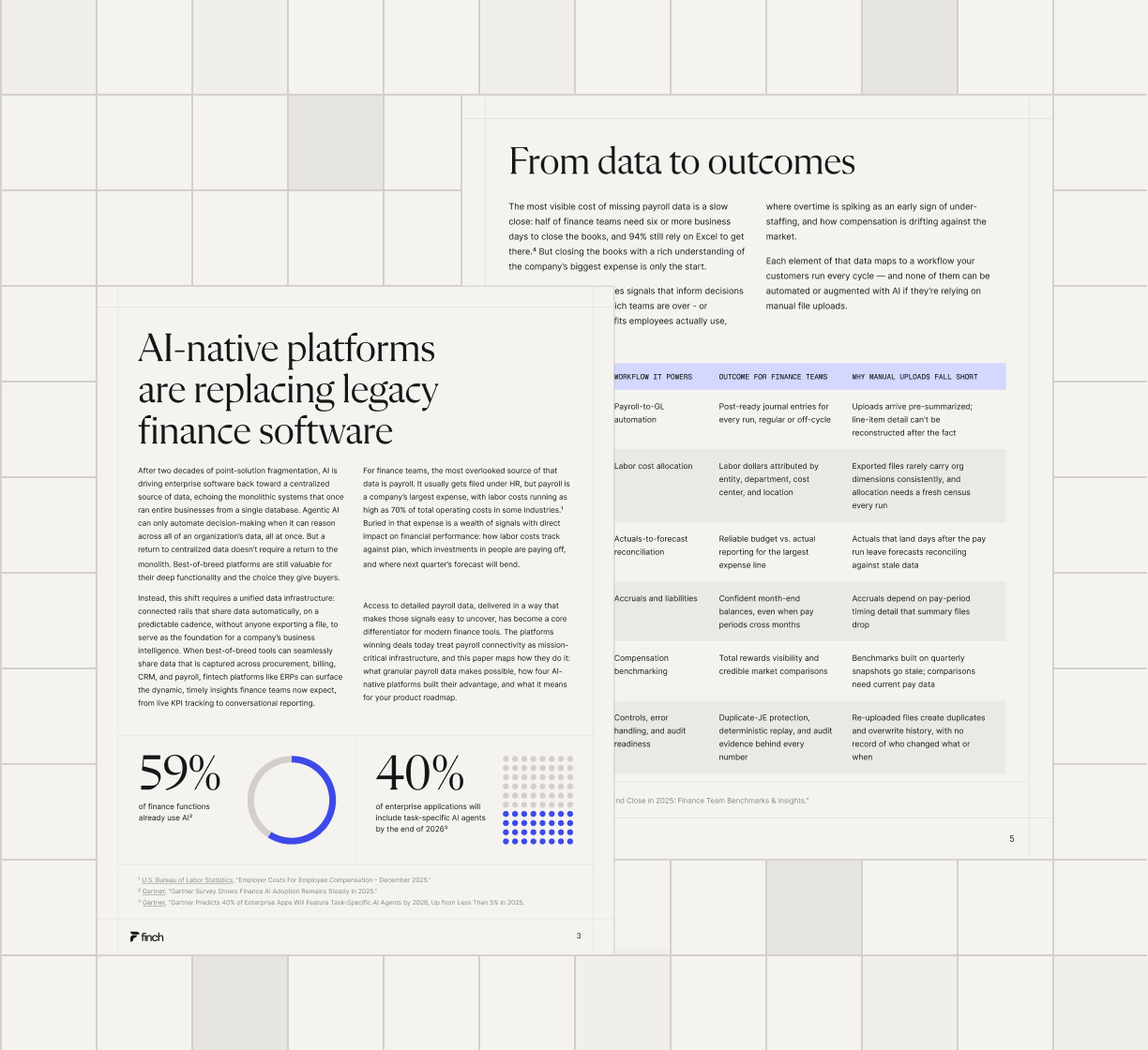
AI is pulling enterprise software back toward a single, connected source of truth — and for finance teams, payroll data is a critical piece of the puzzle.
Payroll is often overlooked or filed under HR, but it’s the source of the company’s largest expense. Buried in that expense are signals with direct impact on financial performance: how labor costs track against plan, which investments in people are paying off, and where next quarter's forecast will bend.
The platforms winning deals today treat payroll connectivity like the mission-critical infrastructure it is. This white paper maps how they do it, including what granular payroll data makes possible, how four AI-native platforms built their advantage, and what it means for your product roadmap.
Here's what you'll take away from this white paper:
- Payroll is the richest data source finance software ignores. Payroll journals condense the entire payroll into a few lines, hiding the details that matter.
- Granular payroll data unlocks AI-native features. Employee census, pay statements, earnings breakdowns, deductions, and tax withholdings each map to a workflow your customers run every cycle.
- A unified API turns integration into a resource-allocation win. One integration unlocks dozens of providers, absorbs the maintenance of provider-side breakage, and redirects engineering budget back to your core product.
- A look inside the playbook: how four AI-native platforms built their payroll advantage, with stories from DualEntry, Rillet, CandorIQ, and Campfire.